Turnkey Plant Planning vs. Machine-by-Machine Purchasing: How to Choose?
The choice between turnkey plant planning and machine-by-machine purchasing hinges on two core questions: whether your product lines are changing simultaneously, and whether your facility is still being adjusted. If egg processing equipment, filling machines, and other machinery are destined for the same new plant or the same new production line, having a supplier with turnkey plant capabilities plan everything at once can prevent interface conflicts and workflow bottlenecks between individual machines. Conversely, if you are simply replacing one station within an existing line, machine-by-machine purchasing offers greater flexibility and lower cost. Before deciding, confirm three things: the product type and batch size you aim to produce, the available electrical power and space in your facility, and whether you are likely to expand within the next one to two years.
What Criteria Should Buyers Use to Decide Between Turnkey and Machine-by-Machine?
The first question in deciding between turnkey and machine-by-machine is whether this purchase involves two or more product lines coming online simultaneously. For example, if the same facility will house both egg liquid mixing and quantitative filling, a continuous egg steaming and forming line, and dumpling or wonton filling machines, the conveying rhythm, cleaning routes, and electrical configuration of these machines must be coordinated. Purchasing them separately often leads to interface mismatches discovered only on-site. The second question is whether the facility is new or undergoing major renovation. If space and power are still being adjusted, turnkey planning can address everything at once. The third question is whether you plan to expand production lines or add product types in the future. If so, you should choose a supplier that can support future compatibility from the outset. Machine-by-machine purchasing suits buyers whose lines are stable and who are only replacing old equipment or upgrading a single station—for example, those who already have a filling line and simply need to add one high-speed wonton filling machine due to insufficient output. There is no absolute advantage to either turnkey or machine-by-machine; the key is whether the conditions align.
Six Essential Data Buyers Should Prepare for Turnkey Plant Purchasing
Target Product Dimensions and Daily Batch Size
Specify the dimensions, weight, and target hourly output for egg products (liquid egg, steamed egg, egg sheets, etc.) or filled products (dumplings, potstickers, wontons, wonton soup dumplings) to determine machine models and line speed.
Facility Floor Plan and Available Space
Provide the facility's length and width, floor load capacity, door width, and clear height, as these affect equipment placement, conveying direction, and future maintenance access.
Electrical and Air Supply Specifications
Confirm the local voltage, phase, frequency, and whether compressed air is available. Specifications vary significantly across Southeast Asian countries, so this must be confirmed before quoting.
Raw Material and Formulation Characteristics
Describe dough thickness, filling moisture content, and fat ratio, as these determine the applicable range of filling machines and quantitative fillers.
Hygiene and Cleaning Requirements
Indicate whether daily disassembly and cleaning are required and whether local food hygiene regulations apply, as this affects equipment material and surface treatment choices.
Future Expansion and Phased Plans
State whether you plan to add production lines or product types within one to two years, as this affects whether compatibility and expansion interfaces should be reserved from the start.
How Should the Scope of Responsibility Be Defined in a Turnkey Plant Project?
If the scope of responsibility in a turnkey plant project is not clarified at the contract stage, the most common sources of dispute later are 'interfaces' and 'timelines.' Buyers should explicitly list in the contract what the supplier is responsible for: whether it includes facility workflow planning, equipment manufacturing, on-site installation, commissioning and adjustment, operator training, and accompanying improvement during initial mass production. Egg processing equipment and filling machines are different machinery categories. If integrated by the same supplier, that supplier should bear the interface integration responsibility; if they come from different suppliers, the buyer must coordinate. Acceptance criteria should also be agreed in writing in advance—for example, using continuous operating hours, finished product yield, or output per unit time as acceptance benchmarks, rather than merely 'the machine can run.' For cross-border projects, it is also necessary to confirm whether the supplier provides on-site installation and training or only remote guidance, as this directly affects commissioning timelines and initial yield rates.
How can old and new equipment remain compatible during phased expansion?
The most common issue in phased expansion is that equipment purchased piecemeal in the past cannot later interface with new production lines. Buyers should ask suppliers during initial selection whether the model can be upgraded in the future or connected to other product lines—for example, whether the conveying rhythm of the filling machine can match the front-end discharge speed of a continuous egg-steaming and forming line, and whether the capacity of the egg-liquid metering filler can be adjusted to suit different batch sizes. Equipment from the same supplier system is generally easier to integrate in terms of control interfaces, transmission specifications, and maintenance cycles, but this does not mean equipment from different suppliers cannot coexist. The key is whether both parties are willing to provide technical data and interface specifications. Buyers can ask suppliers to provide an "expansion scenario description" at the quotation stage, explaining which components would need to be replaced or added when a new line is introduced in the future. This provides a better basis for evaluating long-term costs than looking only at the current quotation.
How does plant layout planning actually affect production capacity?
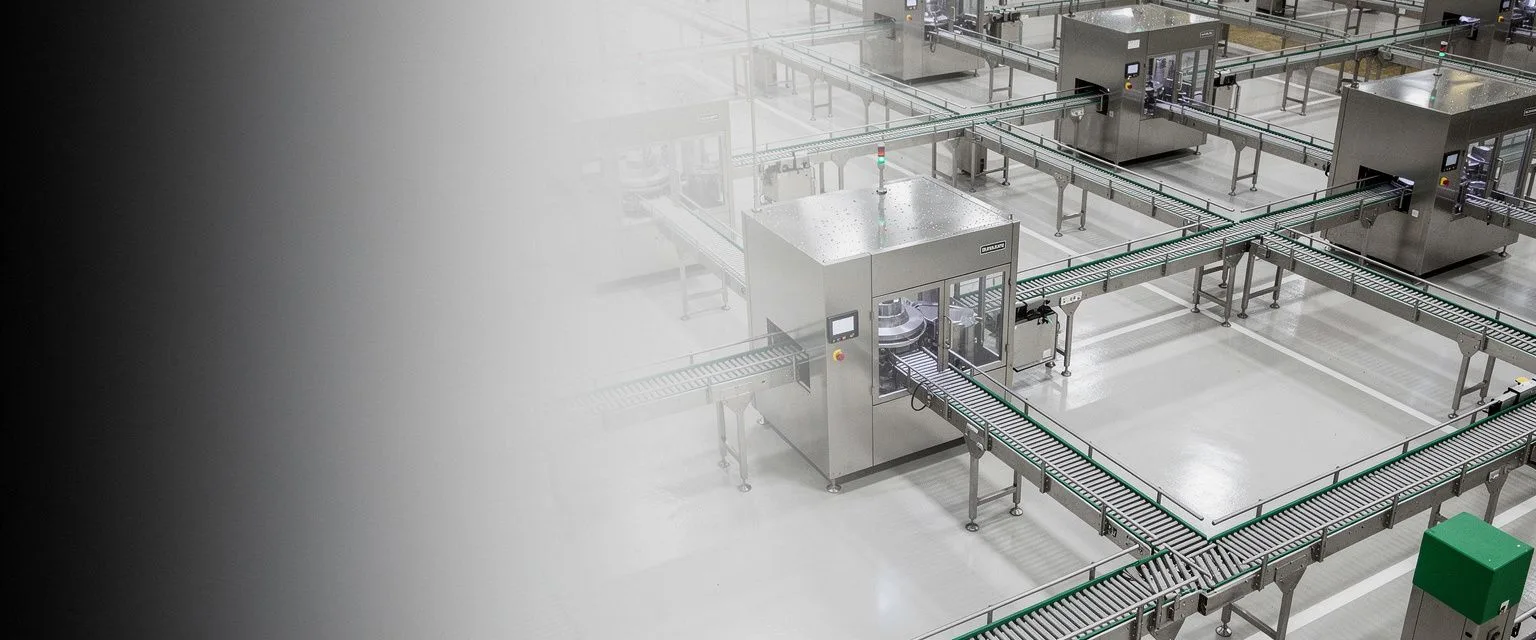
The impact of plant layout on production capacity is often underestimated. Even if each machine operates at high individual efficiency, a poorly designed layout can reduce overall output due to waiting, material handling, and intersecting cleaning routes. Specific scenarios include: whether the raw material intake and finished product shipping areas are separated to avoid cross-contamination; whether the cleaning area is too far from the production area, causing excessive time for reinstallation after cleaning; and whether operator walkways are wide enough to prevent interference when multiple people work simultaneously. For plants where egg processing equipment and filling machines coexist, separating the flow of raw and cooked zones is especially critical. When discussing overall plant planning with suppliers, buyers should ask for a layout diagram showing the flow of people, materials, and water, and request an explanation of the estimated line capacity under that layout, rather than relying solely on individual machine capacity figures.
How should the schedule for equipment delivery and commissioning be arranged?
If no buffer is reserved in the schedule for equipment delivery and commissioning, the entire plant project is often delayed. Buyers should divide the schedule into four phases: manufacturing, sea or land transport, on-site installation, and commissioning and adjustment. The manufacturing period varies with equipment complexity; continuous egg-steaming and forming lines and high-speed wonton filling machines typically have longer manufacturing periods, so buyers should confirm the estimated delivery time before placing an order. The transport period requires special attention for cross-border projects; sea freight plus customs clearance can take several weeks, during which the plant's utilities and foundation work should be completed in parallel to avoid having equipment arrive with no power for testing. For the installation and commissioning period, buyers should confirm whether the supplier will send personnel on site and whether operator training will be conducted simultaneously with commissioning. Buyers can ask for milestones and delay liability to be clearly stated in the contract—for example, which party bears subsequent costs if delivery is delayed by a certain number of days.
What should be noted regarding installation and training for cross-border projects?
For cross-border projects executed in Southeast Asian markets, the arrangement of installation and training directly affects the stability of initial mass production. Buyers should confirm in advance: whether the supplier will send personnel for on-site installation, the number of personnel and length of stay, and whether the training language and materials are fully prepared. Operators should participate throughout the installation period, rather than having only a few supervisors trained on their behalf; otherwise, gaps will appear in the subsequent handover. For Southeast Asian markets such as Thailand, local electrical specifications, plant environments, and food hygiene requirements differ from those in Taiwan. Whether the supplier is familiar with local conditions affects the smoothness of commissioning. Buyers can also ask whether the supplier provides remote support channels after commissioning, such as messaging apps or video guidance, to resolve issues promptly during initial mass production. Whether training materials and operation manuals are available in local language versions should also be confirmed.
Prepare your facility conditions and product specifications before requesting a quote
If you are evaluating egg processing equipment, filling machines, or complete turnkey plant planning, please prepare your facility floor plan, electrical specifications, target product shapes and batch sizes, and future expansion plans before submitting an inquiry, so that a feasible solution can be confirmed based on your actual specifications.
延伸主題
- What to Confirm About Your Facility and Power Supply Before Food Machinery Line Planning
- How to Ensure Compatibility Between New and Existing Equipment When Expanding in Phases?
- turnkey-3
- How Workflow Layout Actually Impacts Production Capacity
- CNC Turning & Milling Services | Precision Machining Manufacturer
- How Are Installation and Training Arranged for International Projects?