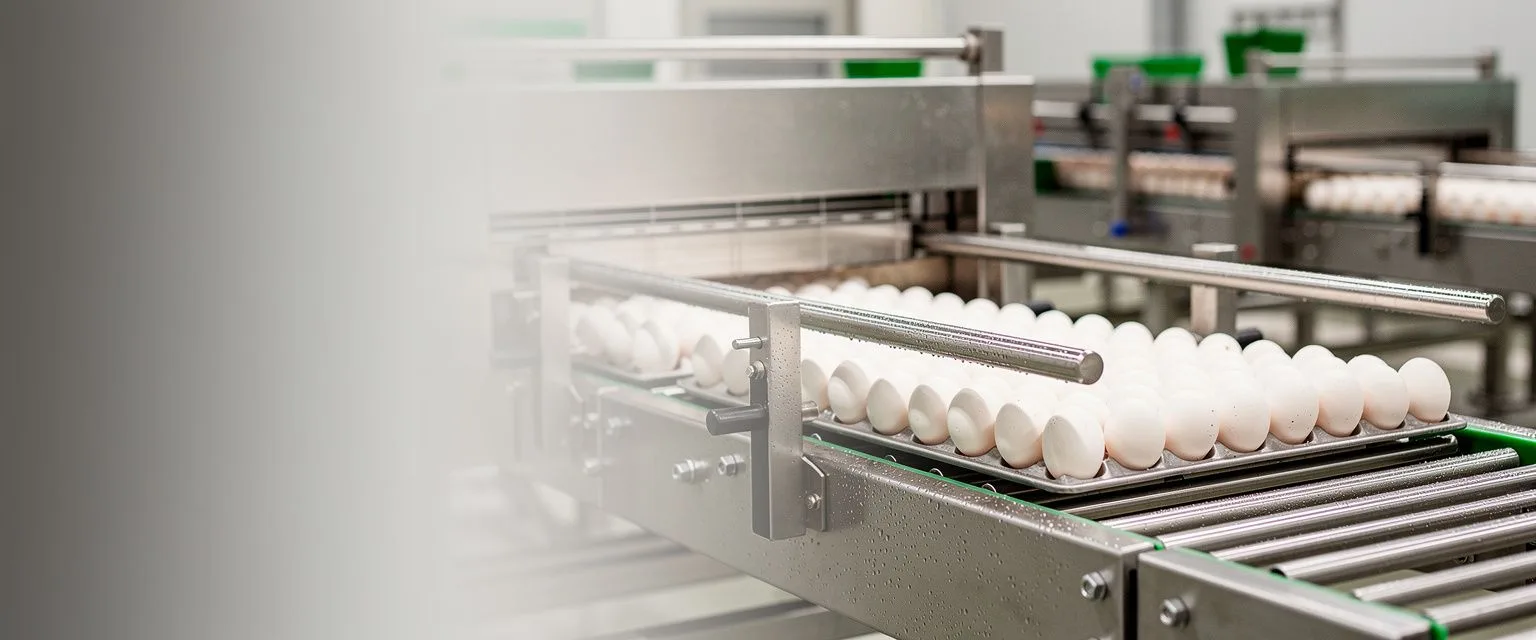
How Should Egg Processing Line Automation Be Implemented in Phases?
The most practical approach to automating an egg processing line is to implement it in three phases. In the first phase, confirm the raw material form (shell eggs or liquid eggs), target capacity, and product specifications. In the second phase, introduce upstream equipment such as washing, shelling, and grading to establish stable incoming material quality. In the third phase, integrate liquid egg metering and filling with a continuous cooked egg forming line, using hygienic design, breakage rate, and overall line yield as acceptance criteria. Each phase should retain interfaces for connection to future line expansions, avoiding the need to repurchase the entire line when scaling up later. For buyers in Southeast Asia, phased implementation also allows capital investment and workforce training to proceed in step, reducing the risk of a one-time full installation.
Why Is It Not Recommended to Purchase All Equipment for an Egg Processing Line at Once?
Egg processing covers upstream handling (washing, shelling, grading) and downstream forming (liquid egg filling, cooked egg forming). These stages have very different requirements for plant environment, personnel training, and utility conditions such as water, electricity, and gas. If buyers purchase all equipment at once, they often face three problems. First, rushing to install downstream equipment before upstream equipment is stable causes overall line yield to be dragged down by the upstream section. Second, during line commissioning, there is no corresponding buffer of personnel to promptly resolve abnormal stoppages. Third, the initial purchase volume is too large, and if product specifications change later, the existing equipment cannot adapt flexibly. Phased implementation gives each stage its own acceptance period, allowing buyers to first use small-scale trial production to confirm market response before deciding whether to expand. For Southeast Asian markets such as Thailand, phasing also facilitates compliance with local regulations regarding the gradual registration and inspection of food processing plants.
What Raw Material and Capacity Conditions Should Be Confirmed in the First Phase?
The core of the first phase is not selecting equipment, but clearly defining what will be processed. Buyers need to answer: Is the raw material shell eggs or already broken-out liquid eggs? Is the target product a liquid egg product (such as filled and packaged liquid egg) or a formed egg product (such as cooked egg blocks or egg roll filling)? What is the daily processing volume range? Can the plant's existing water quality, drainage, and electrical capacity support the steam and cleaning requirements of a continuous cooked egg line? These conditions directly determine whether to choose a benchtop metering filler or a continuous cooked egg forming line. It is recommended that buyers prepare a product specification sheet (including viscosity, solids ratio, and sterilization conditions) at this stage and provide it to the equipment manufacturer as the basis for quotation, avoiding additional costs due to specification changes later.
Three-Phase Implementation Framework for Egg Processing Line Automation
Phase 1: Specification and Capacity Evaluation
Confirm raw material form, product specifications, plant utility conditions, and target capacity as the basis for subsequent machine selection and quotation.
Phase 2: Introduction of Upstream Processing Equipment
Introduce upstream equipment such as washing, shelling, and grading to establish stable incoming material quality, using breakage rate as the acceptance indicator.
Phase 3: Integration of Downstream Forming and Filling
Integrate liquid egg metering and filling with a continuous cooked egg forming line, connect to packaging and downstream processing, and conduct full-line commissioning and yield acceptance.
Phase 4: Hygienic Design and Cleaning Validation
Confirm that the equipment's CIP cleaning design, contact surface materials, and drainage design comply with food plant hygiene regulations.
Phase 5: Personnel Training and Troubleshooting
Establish operating SOPs and abnormal stoppage troubleshooting procedures to ensure stable yield even when personnel change.
Phase 6: Expansion and Line Extension Planning
Reserve interfaces for connection to filling machines and other mechanical lines, facilitating future product line expansion without repurchasing the entire line.
How should you evaluate equipment selection for washing, shelling, and grading?
The selection of upstream equipment directly affects the entire line's egg breakage rate and downstream filling accuracy. For washing equipment, the key is whether the brushing force and nozzle angle can cause shell cracks; for shelling equipment, you need to assess whether centrifugal or differential-pressure technology is used, as different principles have different adaptability ranges for egg sizes; grading equipment, which sorts by weight or size, affects the stability of subsequent filling weights. When evaluating, buyers should request test samples corresponding to the egg diameter range from the equipment manufacturer and actually measure the breakage rate during trial runs. For the Southeast Asian market, the size distribution of local shell eggs differs from that in Europe and the US, so special attention should be paid to confirming the equipment's adaptability to small and medium egg diameters during selection, to avoid discovering inaccurate grading only after purchase.
What indicators should you look at for precision requirements in liquid egg metered filling?
The precision of liquid egg metered filling is usually expressed by the standard deviation and maximum error of each portion's weight, but buyers should focus more on 'long-term stability' rather than single-shot precision. Factors affecting filling precision include: liquid egg viscosity (which changes with temperature and storage time), the design of the filling valve (piston type vs. peristaltic type), and whether the mixing in the metering tank is uniform. For liquid egg products, filling precision directly affects downstream packaging costs and complaint rates; for steamed egg forming lines, filling precision affects the weight consistency of each finished piece and the steaming time settings. It is recommended that buyers request measured data from the equipment manufacturer from continuous operation of at least one hour and observe whether the filling weight drifts over time, as this reflects the real production line condition better than single sampling.
How should you evaluate the capacity and yield of a continuous steamed egg forming line?
The capacity and yield of a continuous steamed egg forming line must be evaluated under 'whole-line' conditions rather than 'single-machine' conditions. No matter how high the single-machine capacity is, if upstream shelling or filling is unstable, the whole-line yield will still be dragged down. When evaluating, buyers should ask the equipment manufacturer to explain: the steaming time and temperature range of the forming line, the convenience of mold changes (which affects product changeover time), and the demolding rate of finished products (poor demolding directly becomes loss). In addition, continuous steamed egg lines are extremely sensitive to the stability of steam supply, so the capacity of the plant's steam boiler and piping design must be evaluated before introduction. For Southeast Asian markets such as Thailand, if the local steam source is a natural gas boiler, you should reserve gas pipe diameter and pressure stabilization devices in advance to avoid discovering insufficient steam only during trial runs.
What should you pay attention to regarding hygiene and cleaning design in egg processing?
The key points of hygiene design in egg processing are 'contact surface material' and 'cleaning accessibility'. All parts that come into contact with liquid egg should use food-grade stainless steel, and seams and welds should be polished to a surface roughness that is easy to clean; the equipment exterior should avoid dead corners and exposed screws to facilitate daily CIP cleaning. For liquid egg lines, liquid egg is an ideal medium for bacterial growth, so cleaning frequency and cleaning water temperature must be written into the operating SOP; for steamed egg forming lines, the cleaning design of molds and conveyor belts directly affects changeover time. When evaluating equipment, buyers should actually visit the manufacturer's test line, observe whether the cleaning process can be completed within a reasonable time, and confirm whether the drainage design complies with local food factory regulations.
Need a Customized Egg Processing Line Based on Your Product Specifications?
Please provide your raw material type, target capacity, and plant conditions. We will confirm the actual specifications and provide phased implementation recommendations and a quotation.
延伸主題
- How to Select Egg Washing, Shelling, and Grading Equipment
- Precision Requirements for Egg Liquid Dosing and Filling
- Production Capacity and Yield of Continuous Egg Steaming and Forming Lines
- How to Evaluate Hygiene and Cleaning Design of Egg Processing Equipment
- How Breakage Rate Affects Overall Line Efficiency
- Equipment Differences Between Liquid Egg and Shell Egg Production Lines