For cross-border projects, what should buyers discuss first regarding installation and training?
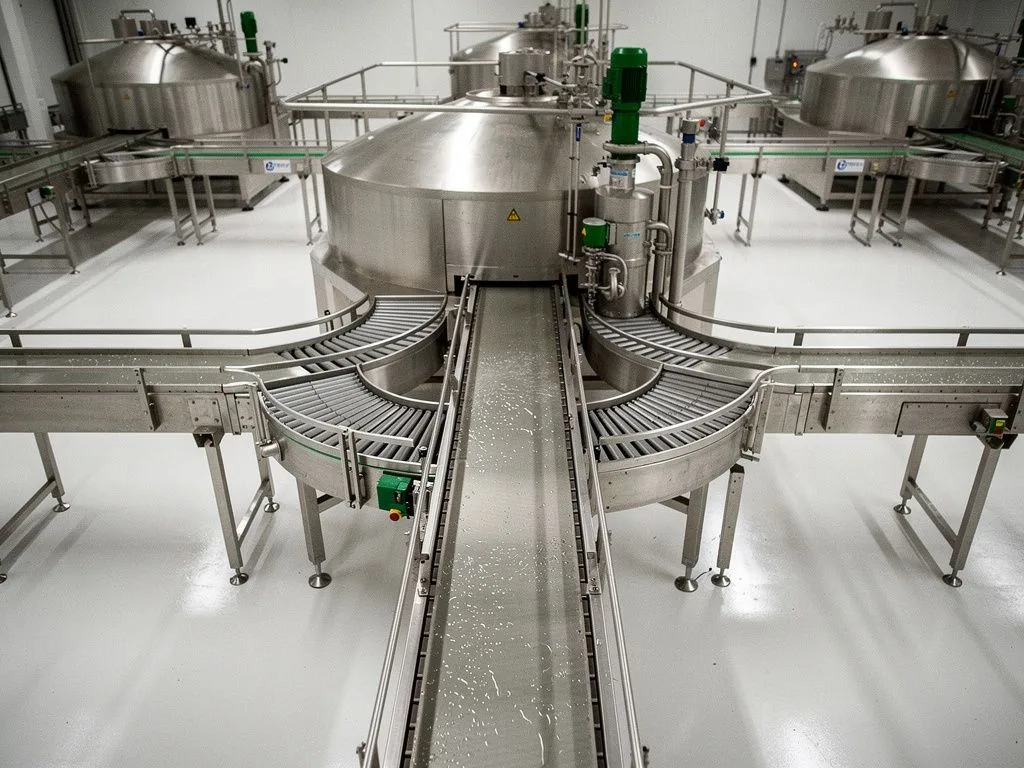
For cross-border food machinery projects, installation and training must be clearly defined before signing the contract: responsibility for site surveys, export packaging and marine insurance, unloading and positioning after arrival, trial runs and machine adjustment, operation and maintenance training, and after-sales service contacts. TWB2B 食品機械 DemoSite Food Machinery handles complete plant planning and turnkey projects, with installation and training as part of the scope. Schedules are customized based on factory layout and product type; actual timelines and costs are confirmed according to specifications.
Overseas buyers' most common question: who is responsible for installing the machine after it arrives at port?
Responsibility for installation after arrival is the most common sticking point when overseas buyers request quotes. In practice, there are three models: first, buyer-managed, where the seller only handles shipping and provides paper manuals, suitable for buyers with their own engineering team; second, the seller sends technicians to the site, with airfare, accommodation, local transport, and insurance covered by the buyer, and technician days agreed based on the number and complexity of machines; third, turnkey, covering everything from unloading, positioning, leveling, to trial runs, common in complete plant planning projects. TWB2B 食品機械 DemoSite Food Machinery's complete plant turnkey projects use the third model, but buyers purchasing individual machines must specify which model they want at the inquiry stage, as adding technician visits later costs significantly more than agreeing in advance. We recommend buyers include factory floor plans, power specifications, air supply specifications, and planned production dates in their initial inquiry, so the seller can directly assess manpower and schedule, rather than discovering at port that no unloading access was reserved.
Who should be trained, for how many days, and on what content?
The target and content of training must be itemized in the contract appendix, otherwise gaps will only be discovered on site. We recommend buyers divide trainees into three levels: first, operators, trained on startup, shutdown, recipe switching, basic cleaning, and safety locks, able to independently handle their shift's production line; second, shift leaders or maintenance staff, trained on mold changes, basic troubleshooting, consumable replacement cycles, and the process for contacting the original manufacturer; third, plant or quality assurance staff, trained on overall line capacity planning, hygiene and cleaning SOP alignment, and spare parts inventory management. Training days vary by machine complexity and line length. The continuous egg steaming and forming line typically requires more days for adjustment and trial runs due to temperature and time curves; the tabletop filling machine is simpler, with operation training completed in half a day to one day, but the high-speed wonton filling machine requires significantly more training days due to its high speed and the need for experience in fine-tuning wrapper thickness and filling weight. We recommend buyers include the number of people in each of the three levels—operators, leaders, and plant staff—and their Chinese/English language needs in the inquiry, to avoid discovering on site that interpretation is needed.
What factory conditions should buyers prepare before installation?
If factory conditions are not ready, technicians can only wait on site, which is the most common cause of delays in cross-border projects. Before technicians depart, buyers should confirm six basic conditions: first, the floor is leveled and load-tested; food machinery is sensitive to vibration, and uneven floors directly affect forming quality; second, power is run to the machine's location, with voltage, phases, and frequency matching the machine nameplate; many Southeast Asian countries use 220V/380V/50Hz, but some facilities have 60Hz sections, so each machine must be confirmed; third, compressed air lines are installed and leak-tested, as filling machines and pneumatic components require stable air supply; fourth, water supply, drainage, and steam lines (if the process involves steaming) have reserved connection points; fifth, unloading access and machine entry routes are cleared, including door width, elevator dimensions, and turning radius; sixth, machine anchoring, guards, and safety signage required by local regulations are ready. If any of these six is missing, the waiting cost after technicians arrive is usually absorbed by the buyer, so we recommend the contract clearly list a 'buyer's preparation checklist before technician arrival' and notify technicians to depart only after each item is checked off.
What raw materials and formulations should be prepared for the trial production stage?
Trial production is the core of acceptance, but many buyers only discover on-site that their raw materials are not fully prepared, which compresses the machine adjustment days. It is recommended that buyers prepare three categories of raw materials one week before the technician arrives. The first category is the main raw materials used in formal mass production, such as flour, fillings, and egg wash, with at least enough supply for three to five consecutive days of trial production. The second category is control groups with different viscosities and moisture contents, used to test the machine's parameter tolerance, avoiding the risk of being unable to produce if suppliers are changed later. The third category is locally available alternative raw materials, such as wheat flour from different origins or meat from different cuts, so that pre-testing can prevent being forced to change formulations later. Regarding formulations, buyers should provide a complete formulation table, including ingredient ratios, moisture content, target finished product weight, and dimensional tolerances, and assign a quality assurance staff member familiar with the formulation to be present throughout the process, enabling immediate judgment of whether the finished products meet expectations. TWB2B 食品機械 DemoSite Food Machinery's turnkey plant project will assist in establishing preliminary standard operating parameters during the trial production stage, but the final mass production parameters still need to be fine-tuned by the buyer based on their own raw material characteristics. This is the part where buyers must invest their own manpower.
How should after-sales support and spare parts supply be negotiated for cross-border projects?
After-sales support and spare parts supply are the most easily overlooked aspects of cross-border projects, yet they are the most likely to cause problems after mass production begins. At the contract stage, buyers should clarify four things. First, the list of wear parts and recommended inventory levels. The technician will identify which parts are high-wear components during the trial production stage, and buyers should place orders for stock before acceptance to avoid downtime waiting. Second, the response time and channels for emergency repair calls, whether through a local agent, video guidance, or dispatching a technician on-site, with the SLA clearly defined. Third, whether spare parts are shipped from Taiwan or stored in a local warehouse. Sea freight spare parts typically have lead times measured in months, so buyers are advised to maintain their own safety stock for critical components. Fourth, the scope of machine warranty and exclusion clauses. Common exclusions include the use of non-original consumables, failure to follow SOPs, and natural disasters, and buyers should review each clause carefully. TWB2B 食品機械 DemoSite Food Machinery's turnkey plant planning project will include the above four items as annexes to the contract, but buyers purchasing individual machines need to request these from the seller themselves; otherwise, the definition of after-sales support will revert to 'to be discussed after shipment,' which poses a high risk to mass production.
What special considerations should be taken for cross-border projects in the Southeast Asian market?
In addition to the general items mentioned above, cross-border projects in the Southeast Asian market have several regional nuances that buyers should pay attention to. First, language and documentation: whether the operation manuals, maintenance manuals, and electrical control diagrams are provided in Thai or English will directly affect the efficiency of future in-plant training and troubleshooting, so it is recommended to specify the language and number of copies in the contract. Second, voltage and frequency: industrial electricity in Thailand is mainly 380V/50Hz, but some older factory areas still have 220V configurations, so the nameplates of each machine should be checked before the technician arrives. Third, climate and humidity: Southeast Asia has high humidity, which imposes stricter requirements on the storage conditions of egg wash and flour, so dehumidification of the factory and raw material warehousing should be included in the overall plant planning. Fourth, shipping and customs clearance: food machinery is non-standard equipment, and customs clearance often requires supplementary documents such as HS codes and usage descriptions, so buyers are advised to confirm with local customs brokers in advance. Fifth, religion and holidays: Thailand has long holidays such as Songkran, so the technician's on-site schedule should avoid consecutive holidays; otherwise, local manpower will be insufficient. Confirming these five items in advance can avoid most common delays in Southeast Asian cross-border projects.
Six deliverables that buyers should specify in the contract for cross-border project installation and training
Site survey and factory condition confirmation
Before departure, the technician completes item-by-item checks of the floor, power supply, air supply, water supply and drainage, lifting access, and safety facilities to avoid waiting on-site.
Port unloading and positioning installation
Clearly define whether the seller dispatches a technician or the buyer handles it, along with the responsibility and acceptance standards for lifting, leveling, machine fixing, and guardrail installation.
Trial production, machine adjustment, and parameter establishment
The buyer prepares main raw materials, control groups, and alternative raw materials, and the technician assists in establishing preliminary SOP parameters, with final mass production parameters fine-tuned by the buyer.
Three-tier personnel training
Operators, team leaders, and plant maintenance staff receive tiered training covering startup/shutdown, mold changes, troubleshooting, production line planning, and spare parts management.
Wear parts list and spare parts recommendations
The technician lists high-wear components during the trial production stage, and the buyer places orders for stock before acceptance to avoid downtime waiting for sea freight spare parts after mass production begins.
After-sales support channels and SLA
Clearly define the response method for emergency repair calls, language, document versions, and warranty exclusions. For cross-border projects, it is recommended to request documents in English or the local language.
What is the difference between turnkey plant installation and single-machine purchase in terms of installation and training?
The difference in installation and training between turnkey plant projects and single-machine purchases mainly comes down to where the 'integration responsibility' lies. In a turnkey plant project, the seller is responsible for the overall line planning, from raw material intake, forming, steaming or filling, to the packaging section. Installation and training are scheduled based on the entire line's trial production, with the number of technicians and days determined by the line length. The buyer only needs to deal with a single point of contact. In a single-machine purchase, the buyer is responsible for integrating upstream and downstream processes themselves, and the seller is only responsible for the installation and operation training of that specific machine. Cross-machine interface issues must be coordinated by the buyer. TWB2B 食品機械 DemoSite Food Machinery's three main product lines—egg processing equipment, filling machines, and other machinery—are often combined in turnkey projects, such as egg liquid mixing and quantitative filling paired with a continuous steamed egg forming line, or a tabletop filling machine paired with a high-speed wonton filling machine. The installation and training schedule for such combinations is significantly longer. We recommend that buyers evaluating turnkey versus single-machine options include the costs of 'integration responsibility' and 'cross-machine training coordination' in their comparison, rather than only looking at the single-machine quotation.
Send us your plant conditions and target schedule, and let's first discuss the division of installation and training work
If you are evaluating an international food machinery project, please send us your plant floor plan, power and air supply specifications, target production date, and the number of trainees. We will provide installation and training division recommendations and schedule planning based on your plant and product type. The actual cost will be confirmed based on the actual specifications.