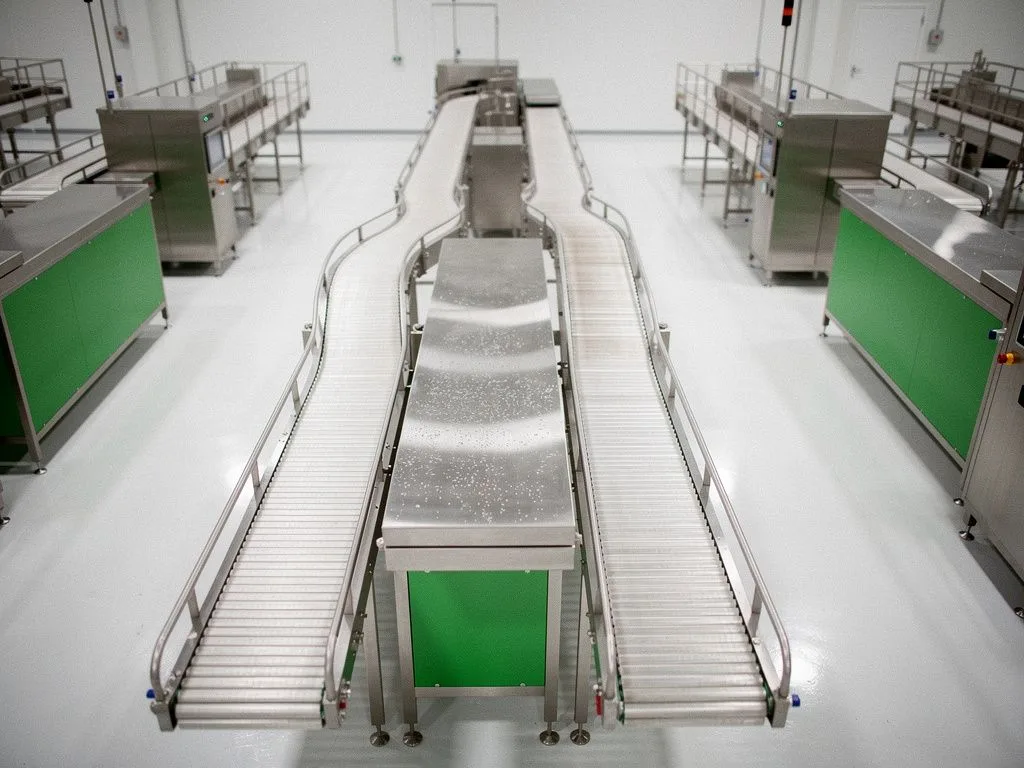
How should equipment installation and commissioning schedules be arranged?
The commissioning schedule for a complete plant must be planned in sync with three factors: factory floor layout, product line complexity, and personnel training. Egg processing equipment, filling machines, and other machinery have different installation sequences, so buyers should confirm the turnkey milestones, responsibility for individual machine testing, and the adjustment window after production starts before signing the contract. If the schedule only focuses on the shipping date, issues with the floor layout or electrical configuration often surface only during commissioning, and rushing the work can destabilize the quality of the first batch of production.
From which day should the commissioning schedule for a complete plant start counting?
The commissioning schedule should start from the day the factory is ready for equipment installation, not from the contract signing date. Readiness conditions include electrical power, water supply and drainage, compressed air, steam, and completed foundation flooring. If these are not in place, the equipment can only sit idle even after delivery. When negotiating the contract, buyers should ask the supplier to provide a pre-installation checklist and compare it item by item against their own factory progress. For turnkey projects in Xinwu, Taoyuan, this checklist is often set as one of the payment milestones to avoid unclear responsibility. When factory readiness and equipment delivery schedules are out of sync, both parties should agree in writing on a buffer period rather than relying on verbal promises. If the start date for commissioning is vaguely defined, delays at every subsequent stage will be blamed on the other party—this is the most common point of dispute for Southeast Asian buyers.
How should the installation sequence for egg processing equipment, filling machines, and other machinery be arranged?
The installation sequence should follow the principle of 'downstream equipment first, upstream equipment later' to prevent downstream equipment from blocking the upstream workflow. For egg processing equipment, for example, the continuous egg-cooking and forming line is a critical step before packaging and should be installed and positioned first, allowing the upstream egg-liquid mixing and metered filling equipment to be connected in sequence. The situation is different for filling machines: compact tabletop electric filling machines are small and can be flexibly placed, so they are usually installed last. High-speed wonton or dumpling filling machines, because of their fast production pace, need reserved space for operators and finished-product conveyors, so their positions should be decided during the layout planning stage. Other machinery, such as water treatment or cleaning equipment, belongs to the shared upstream section and should be installed first with piping connections completed. When reviewing the installation plan, buyers should pay special attention to whether the interfaces between equipment are clearly marked on the drawings; otherwise, commissioning often stops due to mismatched piping or control signal connections.
Six essential milestones for the commissioning schedule
Pre-installation readiness check
Verify electrical power, water supply and drainage, steam, compressed air, flooring, and hoisting routes item by item. The commissioning date cannot start until these are completed.
Individual machine positioning and dry-run test
Power up and run each machine independently without material to confirm motor direction, lubrication, and control signals are normal, and test basic functions.
Individual machine test with material
Run with actual raw materials to adjust metered filling, forming, or filling parameters, and record production speed and yield benchmarks.
Full-line integrated test
Connect the entire line from egg-liquid mixing to egg-cooking forming, or from high-speed wonton filling to the packaging section, simulating actual production pace.
Operator training
Operators, cleaning staff, and quality control staff train on the machines in groups to confirm they can independently handle line changes, cleaning, and basic troubleshooting.
Post-production adjustment window
Reserve a period for on-site or return-to-factory adjustments after formal production begins to address parameter drift caused by actual raw materials.
The most common point of failure in a complete production line is not the individual machines, but the interface design between them. The overall line control involves the synchronization of multiple machines, signal transmission, and abnormal shutdown logic. Once the production speed of the front-end filling machine and the back-end packaging machine are mismatched, the responsibility often lies with the interface design rather than the individual machines. Buyers should require the supplier to submit a 'complete line control diagram' in the contract, indicating the input/output signals and the division of responsibility for each piece of equipment. Buyers in Southeast Asian markets such as Thailand often face high communication costs for line synchronization testing due to language barriers and time differences. It is recommended to specify the number of on-site engineers and working days in the contract.
Should personnel training be conducted before or after commissioning?
Personnel training should be conducted in parallel with single-machine test runs with materials, rather than waiting until the complete line synchronization is finished. If operators have not been trained in line changeover, cleaning, and basic troubleshooting, human error during line synchronization can easily cause machine stoppages, delaying the schedule. For egg processing equipment, the steamed egg forming line involves temperature and time parameters, and operators need to understand the basis for adjusting each zone. For the filling machine, the dough thickness, filling quantity, and forming cycle require hands-on feel and parameter comparison to master. Buyers should designate seed operators for training before commissioning, and these personnel will then lead subsequent shifts. Whether training materials are available in Chinese, Thai, or English is also a critical item for Southeast Asian buyers to confirm in advance, to avoid relying solely on verbal translation on site.
How long should the post-production adjustment window be?
The post-production adjustment window should be at least two to four weeks, with the actual length depending on the complexity of the product line and the variability of raw materials. The viscosity of the egg liquid used in egg processing equipment fluctuates with season, origin, and storage days, and the temperature curve for steamed egg forming must be fine-tuned accordingly. The gluten strength of the dough for the filling machine is affected by flour batch and ambient humidity, and at high-speed filling, breakage or filling misalignment is more likely to occur. These parameter drifts cannot be fully predicted during the commissioning phase and must be corrected based on actual production data feedback. In the contract, buyers should require the supplier to provide clear terms for 'post-production on-site or return-to-factory service,' including response time, number of adjustments, and whether additional fees apply. For a complete plant project in Xinwu, Taoyuan, involving shipment to Southeast Asia, the time for engineer visas and flights must also be factored into the adjustment window calculation, to avoid a large gap between written commitments and actual execution.
What are the three most common causes of commissioning delays?
The three most common causes of commissioning delays, in order, are plant foundation works, parameter convergence during single-machine test runs with materials, and interface integration during complete line synchronization. Plant foundation works include floor curing, electrical power distribution panels, and steam piping. These items are often delayed by local contractor scheduling. If the buyer has not coordinated in advance, the equipment will have to wait upon arrival. Parameter convergence during single-machine test runs with materials refers to the process of adjusting the metering filling, forming temperature, or filling cycle from 'able to run' to 'running stably.' The duration of this phase depends on raw material consistency and operator proficiency. Interface integration during complete line synchronization involves signal communication between front-end and back-end equipment, buffer tank capacity, and abnormal shutdown logic, often requiring additional control program modifications. When scheduling, buyers should reserve buffer days for each of these three areas, rather than using linear estimates that compress the overall timeline.
Tell Us About Your Facility Conditions and Product Lines
Provide your facility layout drawings, product line plans, and target production start date. We will confirm the feasible schedule for site entry sequence, commissioning milestones, and adjustment windows based on your actual specifications.