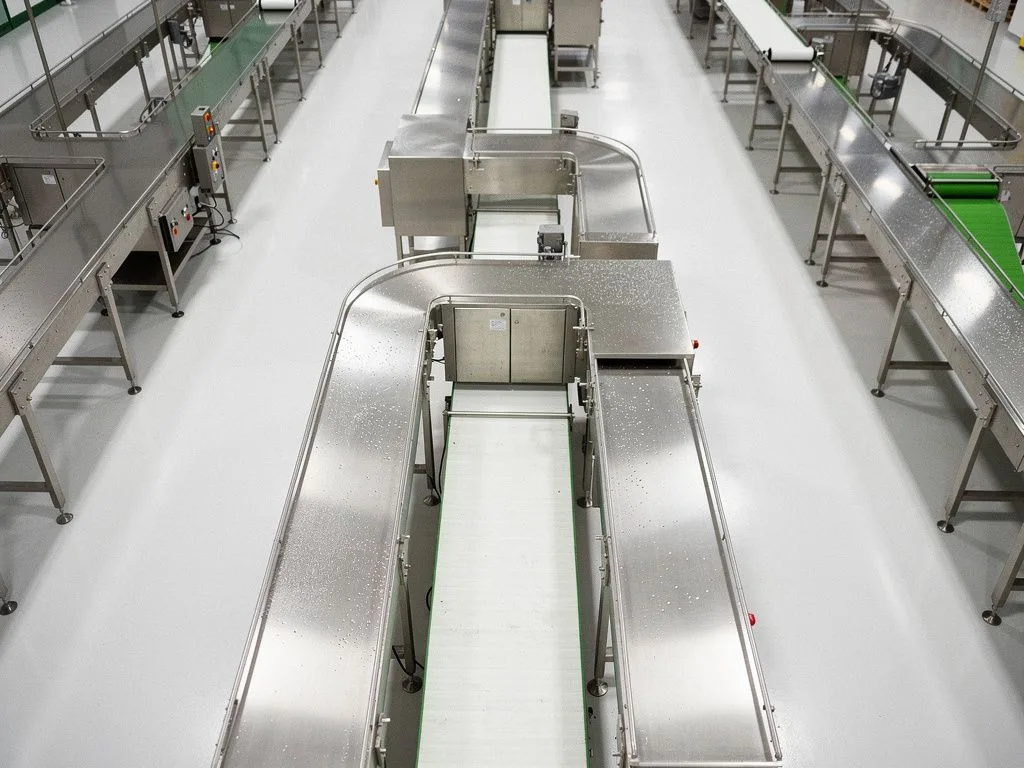
Before planning a complete food machinery plant, what factory and electrical conditions need to be confirmed?
Before starting a complete plant planning project, buyers must first review four items: factory size and floor load capacity, locations of water supply, drainage, and steam pipelines, electrical specifications (voltage, phases, available capacity, and grounding method), and target products and production capacity. If any of these four items is missing, the equipment supplier cannot complete a usable layout drawing and quotation. Taoyuan-based Da Lian Food Machinery always uses these four items as prerequisites when undertaking turnkey complete plant projects for egg processing equipment, filling machines, and other machinery, customizing the planning based on the factory and products.
What basic factory information is needed to start complete plant planning?
What basic factory information is needed to start complete plant planning? The answer is: factory floor plan, floor load capacity, clear height under beams, freight elevator and door dimensions, and location drawings of existing water supply, drainage, steam, and compressed air pipelines. The continuous egg steaming and forming line in egg processing equipment requires steam and drainage, while the filling machine production line requires compressed air. If pipeline locations conflict with machine placement, the buyer will absorb the additional costs. If the buyer has not yet obtained existing pipeline drawings, they should inform the equipment supplier during the inquiry stage that "pipelines are pending" to avoid inaccurate quotations. If the factory is leased, it is necessary to confirm with the landlord whether drilling, installing pipe racks, and modifying electrical systems are allowed, as these will affect the construction schedule and costs. In practice, buyers can first use hand-drawn sketches to mark door widths, freight elevator load capacity, and main column positions, then ask the equipment supplier to conduct on-site measurements, which is faster than waiting for complete architectural drawings to enter the planning stage. If the factory is on the second floor or above, it is also necessary to confirm the impact of vibrating machinery on tenants below to avoid future complaints from neighbors.
What special requirements do egg processing equipment have for factory and utilities?
What special requirements do egg processing equipment have for factory and utilities? The answer is: liquid egg is a high-protein liquid, and the process requires chilled water or cooling water, cleaning water, and discharge pipelines. The continuous egg steaming and forming line also requires a stable steam source and exhaust space. The liquid egg mixing and metering filling section is usually located near the refrigerated raw material area, while the continuous egg steaming and forming line requires a longer straight section. The buffer and material flow between the two will affect the overall factory space efficiency. Buyers should first confirm whether the factory can simultaneously accommodate the CIP cleaning area, finished product cooling area, and packaging area, and reserve space for future line expansion; otherwise, expansion will require relocating the entire plant. Taking liquid egg processing as an example, if the material flow from the refrigerated raw material area to egg breaking, filtering, and pasteurization is too long, the time liquid egg remains at room temperature increases, directly affecting finished product quality and hygiene risks. During the early planning stage, buyers should mark temperature zones on the floor plan and ask the equipment supplier to adjust machine sequence and pipeline routing accordingly, rather than discussing material flow only after quotation.
How to determine the electrical and compressed air specifications for a filling machine production line?
How to determine the electrical and compressed air specifications for a filling machine production line? The answer is: first confirm the available voltage in the factory (commonly 220V or 380V), phase (single-phase or three-phase), and total capacity, then calculate based on the number of machines and simultaneous operation factor whether an application to Taipower for capacity expansion is needed. The electrical requirements of a tabletop electric filling machine (used for dumplings and potstickers) and a high-speed wonton and dumpling filling machine are different; the former is mostly single-phase with small capacity, while the latter is three-phase and requires stable compressed air. If buyers set up factories in Southeast Asian markets such as Thailand, they must specifically confirm the local voltage and frequency (Thailand is 220V/50Hz) and reserve space for transformers and voltage stabilizers to avoid machines being unable to start upon arrival. The supply volume and pressure stability of compressed air directly affect the quality of filling and forming; insufficient air pressure can cause poor adhesion between wrapper and filling and weak sealing of finished products. Buyers should inform the equipment supplier of the existing air compressor specifications (horsepower, air receiver tank capacity, presence of dryer) during the inquiry stage. If a new air compressor is needed, the compressor room and pipeline length must be included in the factory planning to avoid excessive pressure drop.
The pre-installation work is not just about drawing and quoting; it also includes confirming local sanitation regulations, water quality, and the steam source (whether a boiler will be installed on-site or purchased externally). These factors all affect machine selection and the quotation content. If the buyer can simultaneously provide a water quality test report and boiler specifications, the equipment supplier can determine earlier whether water treatment equipment needs to be added or the steam connection needs to be adjusted, further shortening the subsequent design iteration time. In practice, the process begins with a written confirmation of factory conditions and electrical specifications before moving into machine configuration and quotation. Buyers who want to shorten the lead time should prepare the factory floor plan, target products (product type, dimensions, filling type), and estimated production capacity at the time of first contact; missing any of these three will delay the quotation.
What are the pre-installation items buyers most often overlook?
The answer is: floor load-bearing capacity (especially in areas where heavy machinery will be placed), drainage slope and grease trap facilities, emergency power shut-off locations, and reserved space for future line expansion. The continuous egg steaming and forming lines and high-speed filling machine models from egg processing equipment are relatively heavy equipment. If the floor load-bearing capacity is insufficient, reinforcement must be done in advance, and the reinforcement cost is usually not included in the equipment quotation. Insufficient drainage slope will cause wash water to accumulate, affecting food hygiene and compliance with local regulations; the emergency power shut-off location is related to operational safety and insurance review. Buyers should check off each item against a written checklist before signing the contract to avoid future additions. In practice, buyers often also overlook machine maintenance space (how much aisle space is needed at the rear and sides), lighting and waterproofing levels (the washing area must be IP65 or above), and the distance between operator traffic flow and changing rooms and hand-washing/sanitizing areas. These details should be incorporated at the layout drawing stage; otherwise, if it is only discovered during on-site installation that the aisles are too narrow or the cleaning traffic flow crosses the production traffic flow, the only option is often to tear down partitions and redo them.
How do factory conditions in Southeast Asia differ from those in Taiwan?
The answer is: voltage and frequency, the power application process, drainage regulations, and fire safety codes are all different, so buyers cannot directly apply Taiwanese experience. Taking Thailand as an example, the local industrial power application process takes longer, and if the factory is newly built, applications must be submitted to the local power company well in advance. For drainage, the water quality standards of the Thai Ministry of Industry must be met, and the cleaning wastewater from egg and filling production lines requires pre-treatment facilities. When serving Southeast Asian markets such as Thailand, Ta Yuan Food Machinery in Taoyuan asks buyers to provide the local factory floor plan and the power company's reply letter, and then adjusts the machine configuration and quotation accordingly, to avoid discovering specification mismatches only after arriving on site. Language and document processing are also common variables. Documents from local power companies and health authorities are mostly in the local language. If the buyer does not have a local contact to assist with translation and submission, the application progress can easily be delayed. It is recommended that buyers confirm, before starting the overall factory planning, whether they already have a local consultant or agent who can assist with power, fire safety, and health permits, to avoid the situation where the equipment arrives on site but legal production still cannot begin.
Does owning versus leasing the factory building affect overall factory planning decisions?
The answer is: with an owned factory, you can freely configure piping, drilling, and floor reinforcement, while with a leased factory, landlord restrictions, lease term length, and end-of-lease restoration costs must all be factored into the evaluation. Common restrictions for leased factories include no drilling into the floor to secure machines, no installation of exposed pipe racks, and no changes to the electrical distribution panel location. These all limit machine placement and subsequent maintenance access. If the lease term is shorter than the expected service life of the equipment, the buyer must also assess the cost of dismantling and reinstallation in the event of a move. In practice, buyers can first ask the landlord to confirm in writing the scope of permitted work, and then hand this to the equipment supplier to adjust the configuration accordingly. For example, using removable floor mats, movable pipe racks, or floor-standing machines may have a slightly higher unit price, but can avoid disputes and penalties for restoration when the lease ends.
Six Items Buyers Should Prepare Before Whole-Plant Planning
Factory floor plan and existing piping diagrams
Include dimensions, clear height under beams, floor load capacity, and locations of water supply/drainage, steam, and compressed air lines. Missing any one of these will delay the layout drawing.
Electrical specifications and available capacity
Voltage, number of phases, frequency, total capacity, and grounding method. For factories in Southeast Asia, be sure to confirm the local power company's application process.
Target products and piece specifications
For egg products (liquid egg, steamed egg products) or filled products (dumplings, potstickers, wontons, and similar), specify the piece shape, dimensions, and filling types.
Estimated production capacity and shift schedule
Single-shift or two-shift operation and daily output targets, which are used to determine the number of machines and buffer area size.
Local regulations and hygiene requirements
Food factory registration, HACCP, or local sanitation standards affect the layout of drainage, washing areas, and finished product zones.
Reserved space for future line expansion
Reserve machine positions, piping connection points, and electrical capacity to avoid relocating the entire plant when expanding production.
What do equipment suppliers do when factory and electrical data are incomplete?
When factory and electrical data are incomplete, the equipment supplier will typically complete an initial layout and quotation based on 'assumed conditions,' and note the pending items on the quotation for the buyer to provide later before revisions are made. This approach avoids project stagnation, but the risk lies with the buyer—if the actual factory conditions differ from the assumptions, the machines may not be installable upon arrival or may require additional engineering work. Taoyuan-based Da Lien Food Machinery, when undertaking whole-plant planning and turnkey projects, recommends that buyers provide complete information at the time of first contact. If the data truly cannot be obtained, it should be clearly marked as 'to be confirmed' in writing with an agreed schedule for submission, to avoid later disputes. If buyers are concerned about inaccurate assumptions, they can ask the supplier to list each assumption on the quotation (e.g., 'assumed available power 380V/three-phase/sufficient capacity' or 'assumed drainage slope 1/100') and specify the adjustment method and cost principles if the assumptions change. This allows for quick comparison of differences after the information is provided, rather than renegotiating the entire quotation.
Prepare the six items to speed up whole-plant quotations
If you are evaluating egg processing equipment, filling machines, or turnkey whole-plant projects, please prepare the factory drawings and electrical specifications first, then contact Taoyuan-based Da Lien Food Machinery to accelerate the production of layout drawings and quotations.