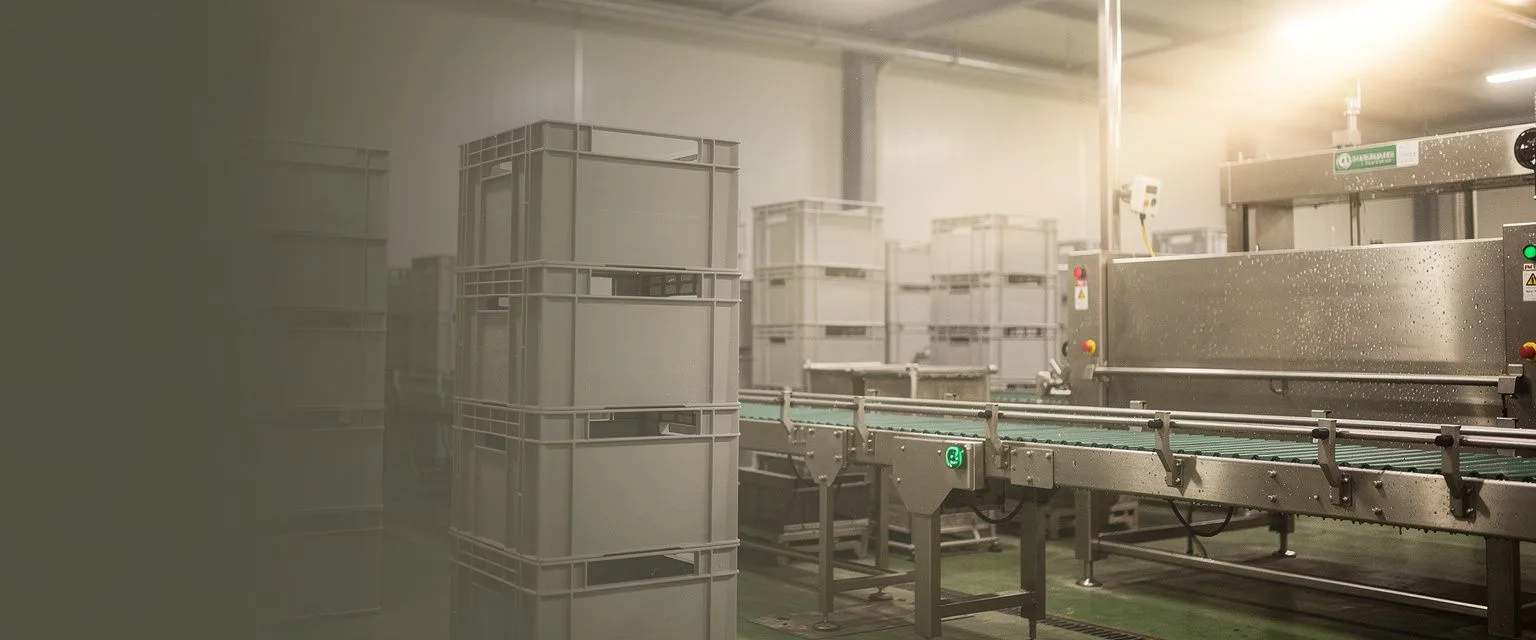
What are the key equipment requirements of Thailand's food processing industry?
The equipment requirements of Thailand's food processing industry are shaped by five interlocking variables: climate, voltage, regulations, labor, and export orientation. Compared with factory environments in Taiwan or mainland China, Thai plants commonly face the dual conditions of temperatures above 30°C and relative humidity above 80%. For water-intensive operations such as egg liquid filling and encrusting, rust prevention and heat dissipation must be the top priorities in equipment selection. In addition, Thailand's power supply is 220V/50Hz, which differs from Taiwan's 220V/60Hz; if motors and control components are not pre-matched accordingly, they will directly affect rotational speed and production line pacing. On the regulatory side, most Thai food plants must comply with HACCP, and a significant share of customers in Muslim markets require halal certification. These requirements feed back into equipment materials, sanitary design, and process documentation. For overseas buyers, understanding these characteristics is not about comparing advantages or disadvantages, but about laying out the variables that will affect machine delivery and subsequent maintenance as early as the inquiry stage.
How does the high-temperature, high-humidity environment of Thai plants affect the selection of egg processing equipment and encrusting machines?
The high-temperature, high-humidity environment of Thai plants directly affects the selection of egg processing equipment and encrusting machines, because the core working areas of both types of machinery are closely related to water, steam, and protein residue. If the egg liquid mixing and metered filling sections use bare carbon steel parts in a long-term environment above 30°C with relative humidity above 80%, corrosion will occur noticeably faster than in temperate-climate plants, and the subsequent costs of cleaning and downtime for maintenance will be reflected in the overall plant availability rate. For continuous egg steaming and forming lines, which involve both steam heating and surface condensation, if the protection rating of the machine frame and conveying sections is insufficient, moisture entering the electrical control cabinet can cause insulation degradation and sensor misjudgment. As for encrusting machines, when a tabletop electric encrusting machine processes dumpling and potsticker dough, the stickiness of the dough changes more noticeably under hot and humid conditions than in Taiwan, so the tension and cutting rhythm of the forming section need to be fine-tuned according to on-site conditions. This is why buyers should proactively provide the temperature and humidity range of their plant during the inquiry stage, rather than only giving production capacity targets. For suppliers like TWB2B 食品機械 DemoSite Food Machinery that provide both egg processing equipment and encrusting machines, the starting point of the selection discussion should be the environmental parameters, and then work backward to materials, electrical protection, and sanitary design.
What practical problems does the difference between Thailand's 220V/50Hz and Taiwan's 220V/60Hz cause?
The difference between Thailand's 220V/50Hz and Taiwan's 220V/60Hz causes practical problems in three areas: motor speed, sensor response, and control component lifespan. When a motor operates at 50Hz, its speed is reduced by approximately 17% compared with a design of the same pole count at 60Hz. This directly affects the forming rhythm of encrusting machines and the output of the metering pump for egg liquid filling. If the pulley is not changed or the inverter parameters are not adjusted before shipment, the actual production capacity of the line will deviate from the original design. Sensor and timer response times also differ between 50Hz and 60Hz; if the sampling frequency of photoelectric sensors and weighing modules is not recalibrated, metering errors will accumulate over long production runs. As for control components, the coils of some Taiwanese-made relays and solenoid valves run hotter under continuous 50Hz operation, which shortens their service life. For buyers, the most practical approach is to require the supplier to clearly mark a "Thailand 220V/50Hz dedicated version" at the contract stage, and to ask for catalog pages of the main components inside the electrical control cabinet, so as to avoid discovering after delivery that a full batch replacement is needed.
Why do Thai food plants need to pay special attention to the equipment requirements of HACCP and halal certification?
Thai food plants need to pay special attention to the equipment requirements of HACCP and halal certification because these two sets of standards are directly written into equipment materials, sanitary design, and process documentation. HACCP requirements for equipment focus on "cleanable, inspectable, traceable." If a machine has dead corners, rough welds, or requires special tools for disassembly, the cleaning validation will be held up. This is especially evident in the forming sections of egg liquid filling lines and encrusting machines. Halal certification further requires that the lubricants, sealing materials, and processing aids used in the equipment must not contain porcine or alcohol ingredients, and that the production line cannot be shared with non-halal products. This is an additional design variable for plants that produce multiple items such as dumplings, potstickers, wontons, and wonton soup. For buyers, during the inquiry stage they should proactively state whether the target market includes Muslim markets such as Malaysia, Indonesia, or the Middle East, and ask the supplier to explain the corresponding configuration of materials and lubrication. Otherwise, if it is discovered after delivery that the seals of the entire line need to be replaced, both cost and schedule will get out of control.
Should local maintenance and spare parts supply arrangements be agreed upon before signing the contract?
Local maintenance and spare parts supply arrangements should be agreed upon before signing the contract, as this is the most critical factor affecting the risk of plant-wide downtime. There are limited maintenance service providers in Thailand that can service egg processing equipment and filling machines. Many machinery suppliers from Taiwan or mainland China do not have their own service networks in Thailand, and parts must be shipped from overseas. When customs clearance and shipping schedules are factored in, a single downtime event can extend to more than two weeks. For buyers, a reasonable approach is to require the supplier to provide a "wear parts list" in the contract, indicating which parts need to be stocked locally and which can be sourced from overseas, and to agree on the response time and on-site service method for emergency repairs. For turnkey plant planning and projects involving multiple integrated machines, the establishment of a spare parts inventory should be completed in sync with equipment delivery, rather than waiting until the production line is running to fill gaps. For suppliers like TWB2B 食品機械 DemoSite Food Machinery that supply egg processing equipment, filling machines, and other machinery simultaneously, buyers can require the supplier to include a spare parts strategy in the proposal at the quotation stage, which is far more practical than trying to remedy the situation afterward.
How should buyers evaluate the response mechanism for cross-border after-sales service?
Buyers should evaluate the response mechanism for cross-border after-sales service from four aspects: response time, on-site service method, language capability, and documentation completeness, rather than simply relying on the supplier's claim that "we provide service." Response time refers to the period from when the buyer issues a service request to when the supplier provides the first response. A common industry commitment is an initial response within 24 hours and a proposed solution within 72 hours, but actual performance varies greatly. Buyers can ask the supplier to provide service records from past projects in Thailand or other Southeast Asian markets as evidence. On-site service method requires clarifying whether the supplier will send personnel to the site or authorize a local agent to perform the service, as this has a significant impact on downtime costs. In terms of language capability, Thai factory operators primarily use Thai. If maintenance manuals and operating interfaces are only available in English or Chinese, troubleshooting efficiency on site will be compromised. Documentation completeness includes circuit diagrams, pneumatic diagrams, wear parts lists, and maintenance schedules, which should be delivered at the time of machine handover rather than sent afterward.
Why does localization of language and operating interfaces affect actual production efficiency?
Localization of language and operating interfaces directly affects the actual production efficiency of Thai factories, because the operator's understanding of the interface determines changeover speed and troubleshooting time. Many imported machines still have operating panels primarily in English or Simplified Chinese. When Thai operators encounter error codes they cannot immediately interpret, they often have to stop the machine and wait for translation. This is especially impactful for continuous egg steaming and forming lines in egg processing equipment, as the steam temperature and conveyor speed need to be fine-tuned according to the product. If operators cannot independently read the parameter pages, every changeover will take longer. For filling machines, parameters such as dough tension and filling quantity on tabletop electric models may need on-site adjustment. If the interface language is not understood, it directly affects the consistency of product weight. For buyers, a reasonable approach is to require the supplier to provide Thai-language operation manuals and panel stickers at the inquiry stage, and to list "Thai operating interface" as an optional contract item. This is more cost-effective than adding it after machine handover.
Six key points Thai food processing industry buyers should check when evaluating equipment suppliers
Climate-adaptive design
Confirm whether the machine materials, electrical control protection rating, and cleaning design are suitable for Thai factory environments above 30°C and 80% humidity, to avoid corrosion and insulation degradation.
Voltage and frequency matching
Require the supplier to specify a 220V/50Hz version and provide catalogs of major electrical control components, to avoid systematic deviations in motor speed and sensor response.
Regulatory compliance capability
Confirm that the equipment design can meet HACCP and Halal certification requirements, including cleanability, material certificates, and documentation of lubricant and seal sources.
Local maintenance and spare parts
Require the supplier to provide a wear parts list and spare parts strategy, and agree on response times and on-site service methods for emergency repairs to minimize downtime risk.
After-sales response mechanism
Review the supplier's service records in Thailand or Southeast Asia, clarify whether service is provided by dispatched personnel or authorized agents, and require complete technical documentation to be delivered simultaneously.
Language and interface localization
Require Thai-language operation manuals and panel stickers, and include changeover speed and troubleshooting efficiency in the evaluation, rather than only considering the machine's specifications.
Clarify Your Thai Factory's Environment, Regulations, and Service Conditions at Once to Accelerate Quotation and Planning
Please send us your factory environment, target products, capacity planning, and local service requirements. We will confirm the corresponding configuration of the overall plant planning and equipment combination based on the actual specifications.
延伸主題
- How Are On-Site Maintenance and Spare Parts Supply Arranged in Thailand?
- sea-market-2
- Thailand Food Machinery Voltage and Frequency Specification Differences
- sea-market-4
- After Purchasing Food Machinery from Thailand, How Should After-Sales Service Response Be Arranged?
- Is a Thai-Language Interface Really Useful for Food Machinery Operators?