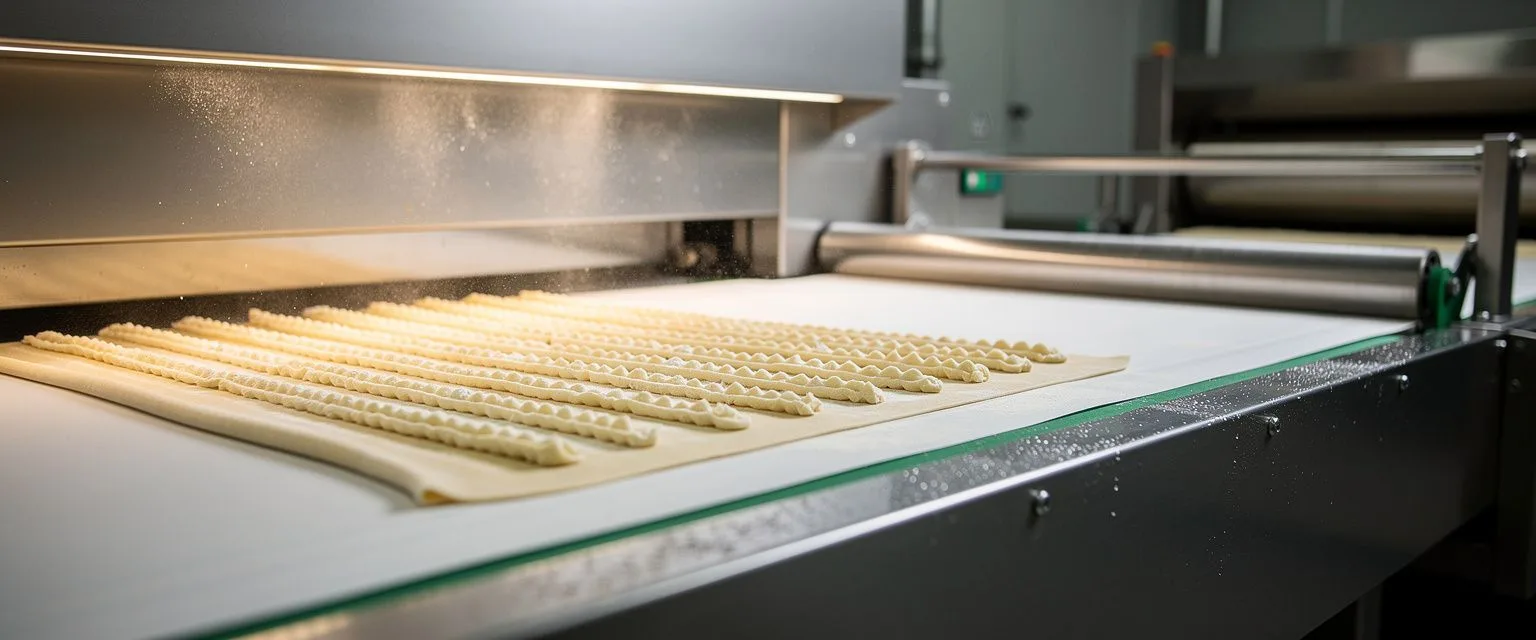
Can one machine be shared for making dumplings, potstickers, and wontons?
Whether dumplings, potstickers, and wontons can be made on the same machine depends on whether the forming principle is the same. A tabletop electric filling machine can switch between the three products by changing molds and adjusting the wrapper-to-filling ratio. For continuous high-speed filling lines, however, the production capacity and forming methods differ, so whether they can be shared usually requires evaluation. Before deciding, you should first clarify product specifications, filling moisture content, and daily output targets, and then determine whether to share one machine or use separate lines.
Why can a tabletop filling machine make dumplings, potstickers, and wontons at the same time?
The forming principle of a tabletop electric filling machine is to press the wrapper and filling together through a mold, so switching between different products only requires changing the corresponding mold set. The wrapper-to-filling ratios for dumplings and potstickers are similar, with the main mold differences being in the crimp pattern and pressing shape. Wontons, on the other hand, have thinner wrappers and less filling, requiring a different wrapper-to-filling ratio setting and a smaller-diameter mold. This type of equipment is suitable for factories with small to medium daily output, such as central kitchens, food ingredient plants, or pilot production stages. For buyers, the key points are whether mold changes require tools, how long the adjustment takes, and whether the wrapper-to-filling ratio parameters for different products can be stored independently, as these directly affect changeover efficiency and product consistency. In practice, a tabletop machine usually allows an operator to remove and replace a single mold within ten minutes, but if the wrapper-to-filling ratio and forming pressure are also changed, additional trial running time is needed. As a next step, buyers should prepare the single-piece weight, wrapper-to-filling ratio, and appearance samples of their three products, along with the estimated daily output, and provide them to the equipment manufacturer to confirm whether the tabletop machine's specifications cover all products.
Where is the production capacity threshold for continuous high-speed filling lines?
Continuous filling lines are designed for high-volume production of a single product, such as a high-speed line dedicated to dumplings or wontons. When a factory needs to produce dumplings, potstickers, and wontons simultaneously, whether they can share the same continuous line depends on the production scale and changeover frequency. If the daily output of each product is sufficient to support several hours of continuous operation, then separate lines are more economical than forcing a shared line. If the output of each product is not large, the downtime and cleaning costs of changeovers on a continuous line will eat into capacity, making it less flexible than tabletop equipment. When evaluating, buyers should lay out the total daily output, output per product, and number of changeovers to determine where the capacity threshold lies. Specifically, the economical output of a continuous line usually occurs when orders for a single product are stable and can run continuously for several hours. If the factory operates on a rotating multi-product basis with low daily output per product, the payback period for a continuous line will be extended by changeover costs. As a next step, buyers can ask the equipment manufacturer to calculate the cost difference between single-line and multi-line configurations based on the actual order structure, as a basis for configuration decisions.
How does filling moisture content affect forming parameters?
Filling moisture content is one of the most sensitive variables in filling and forming. High-moisture meat or vegetable fillings tend to leak water, tear the wrapper, or stick to the mold during pressing. For dumplings, high-moisture fillings require a thicker wrapper and slower pressing speed. For wontons, with thin wrappers and little filling, excessive moisture can directly cause wrapper breakage. Potstickers, which undergo a subsequent pan-frying process, require stronger wrapper-to-filling adhesion, so moisture control is even stricter. When preparing an inquiry, buyers should provide the approximate moisture content of the filling recipe, the coarseness of the meat fiber, and whether frozen filling is used, as this information directly affects the mold specifications and forming parameter recommendations from the equipment manufacturer. In practice, high-moisture vegetable fillings (such as cabbage or chives) tend to release water at room temperature. If the factory uses pre-chilled or semi-frozen filling, the forming parameters will also differ. As a next step, buyers should describe the filling's state at room temperature, refrigerated, and frozen separately, and provide at least one actual recipe's moisture content range, so the equipment manufacturer can adjust the forming pressure and mold diameter recommendations accordingly.
What are the differences in forming between frozen and fresh-made products?
Frozen dumplings, potstickers, and fresh-made products have different requirements at the forming stage. Frozen products undergo rapid freezing, during which the dough and filling change in volume due to water crystallization. Therefore, the dough-to-filling seal must be tighter and contain less air during forming; otherwise, cracking or filling displacement may occur after freezing. Fresh-made products, on the other hand, emphasize texture and appearance, allowing for more refined pleat patterns and dough-to-filling ratios. If the same equipment is to support both frozen and fresh production lines, it is necessary to assess whether the forming pressure is adjustable, whether molds need to be changed, and whether downstream rapid-freezing equipment is required. Buyers should first clarify the final sales format of the product—frozen packaging, refrigerated retail, or on-site preparation—before deciding on equipment configuration. In terms of sales channels, buyers exporting frozen packaged products have the highest requirements for dough-to-filling seal strength, as the products must endure long-distance transport and multiple temperature changes; refrigerated retail and on-site preparation are more sensitive to appearance and texture. As a next step, buyers should list the sales channels and storage conditions for each product item and confirm whether the equipment's forming pressure range covers both frozen and fresh-making requirements.
How should the time cost of line changeover and cleaning be estimated?
Line changeover and cleaning is the most commonly underestimated cost when evaluating shared equipment for multiple product items. A changeover on a tabletop filling machine typically involves disassembling the mold, cleaning the dough rollers and filling pipes, installing a new mold, and trial running and adjustment. Depending on product complexity, the entire process can range from tens of minutes to several hours. Changeover and cleaning on a continuous high-speed line is even more time-consuming, as the pipes and forming chambers are larger and require disassembly, cleaning, reassembly, and trial production. When evaluating, buyers should multiply the changeover frequency by the time per changeover to calculate the actual monthly production capacity lost, and then compare this with the cost of purchasing multiple dedicated machines to determine which configuration is more cost-effective in the long run. In practice, if a factory needs to switch between two or three product items daily, the changeover time on a tabletop machine can usually be kept within an acceptable range. However, if the filling characteristics differ significantly between items (for example, switching from pork-filled dumplings to vegetable wontons), the time required to clean the pipes and avoid cross-flavor contamination will increase noticeably. As a next step, buyers should list the planned product changeover frequency and filling differences for the coming year and ask equipment suppliers to estimate the total monthly changeover hours and labor costs accordingly.
How should production scheduling be arranged for multi-item, small-batch production?
Multi-item, small-batch production is a common reality for many food factories. For example, a single production line may need to alternately produce dumplings, potstickers, and wontons, with each item having relatively small order volumes. In this case, the scheduling principle is to minimize the number of changeovers, such as consolidating production of the same item and avoiding multiple switches within a single day. In terms of equipment selection, tabletop filling machines offer greater flexibility and are suitable for factories with frequent order changes; continuous high-speed lines are better suited for high-volume production with fixed items and stable orders. When planning a complete factory setup, buyers should provide equipment suppliers with their order forecasts for the coming year, batch sizes for each item, and delivery schedules, so that suppliers can offer realistic scheduling recommendations and equipment configuration plans. Specifically, if the factory's order structure is dominated by seasonal items (for example, dumplings in winter and potstickers in summer), the schedule should reserve buffer days for product transitions. If orders are stable year-round but each batch has a short delivery lead time, buyers need to assess whether the changeover speed of tabletop machines is sufficient. As a next step, buyers should provide an order forecast table for the coming year, noting the batch size and delivery schedule for each item, so that equipment suppliers can plan the production line rhythm accordingly.
How can hygiene and cross-flavor risks be managed when sharing equipment?
When multiple product items share the same filling machine, hygiene and cross-flavor issues are the risks buyers most easily overlook. Different items have significantly different filling characteristics—for example, dumplings commonly use pork filling, while wontons may use seafood or vegetable filling. If cleaning is incomplete, residual flavors can affect the taste of the next batch. Whether the pipes, forming chambers, and molds are easy to disassemble and clean is an important criterion when evaluating equipment. Buyers should confirm whether the equipment's contact surfaces are easy to disassemble and wash, whether they support water washing or only dry wiping, and whether the supplier provides recommended cleaning SOPs. For export buyers, local hygiene regulations may impose stricter requirements on cleaning food contact surfaces. As a next step, buyers should provide the hygiene standards of their target market to the equipment supplier to confirm that the equipment materials and cleaning methods comply with local regulations.
Six Key Conditions to Evaluate Before Sharing a Filling Machine
Identical Forming Principle
A press-type filling machine can support dumplings, potstickers, and wontons by changing molds; equipment with a different forming principle cannot be shared.
Adjustable Filling-to-Dough Ratio Range
Confirm whether the equipment can independently set the filling-to-dough ratio for each product item, as this affects product consistency and trial-run time after line changes.
Tolerance for High-Moisture Fillings
High-moisture fillings require thicker dough skins and slower pressing speeds; whether the machine's forming pressure is adjustable is key.
Mold Changeover Time
The complete process from disassembly, cleaning, to installation and trial run directly impacts scheduling flexibility for multi-product production.
Production Capacity and Changeover Frequency
Daily output per product and the number of changeovers determine whether a benchtop flexible configuration or a continuous dedicated line is more suitable.
Downstream Processing Requirements
Different downstream processes such as freezing, fresh-making, or pan-frying require corresponding adjustments to forming parameters and equipment configuration.
How to Communicate with Equipment Suppliers During Whole-Plant Planning?
The value of whole-plant planning and turnkey projects lies in having the equipment supplier provide customized equipment configurations and quotes based on factory space, product mix, and production targets. When buyers negotiate with suppliers like TWB2B 食品機械 DemoSite Food Machinery, they should prepare factory floor plans, electrical and water specifications, product items with estimated daily output per item, filling recipe characteristics, and production line expansion plans for the next one to three years. The more complete this information, the more accurately the supplier can recommend a benchtop filling machine, a continuous high-speed line, or a hybrid configuration. For buyers targeting Southeast Asian markets including Thailand, they should also confirm local voltage, hygiene regulations, and raw material supply chain differences in advance to avoid needing additional modifications after the equipment arrives. In practice, if buyers can provide actual order data from the past year and future expansion plans, the supplier can assess whether the production line needs reserved upgrade space, such as electrical and space requirements for future expansion from benchtop to continuous lines. As a next step, buyers can prepare a summary sheet of "product + output + factory conditions" as the foundational document for initial discussions with the equipment supplier.
Need to Evaluate Filling Machine Configuration Based on Product Specifications?
Provide your product items, estimated daily output, and factory conditions, and let TWB2B 食品機械 DemoSite Food Machinery plan a suitable filling machine and whole-plant configuration based on your actual specifications.
延伸主題
- Dumpling Machine Filling-to-Wrapper Ratio and Mold Changeover Practice
- Production Capacity Boundary Between Tabletop and Continuous Filling Machines
- Forming Differences Between Frozen and Fresh-Made Dumplings
- Effect of Filling Moisture Content on Forming
- Line Changeover Cleaning Time Cost: The Real Burden of Sharing a Line for Dumplings, Potstickers, and Wontons
- How to Schedule Multi-Item, Small-Batch Production