Solutions
Egg products, filled foods, and turnkey plants — three needs, three approaches
Different needs call for different evaluation criteria: for egg processing equipment, look at filling accuracy and hygienic design; for filling machines, look at forming stability and line-change flexibility; for turnkey projects, look at workflow and plant conditions. This page explains what to watch for in each category.

Egg processing equipment — mixing, filling, and continuous cooking
The core of liquid egg processing is uniformity and dosing accuracy. Insufficient mixing leads to inconsistent texture in the finished product, while dosing errors directly affect cost and specification compliance. A continuous egg cooking line must simultaneously control temperature distribution and conveyor speed to ensure consistent doneness in every unit.
When evaluating, please provide the egg liquid formula (whether water or seasonings are added), target finished product specifications, and hourly capacity requirements — these three factors determine the machine model and configuration.
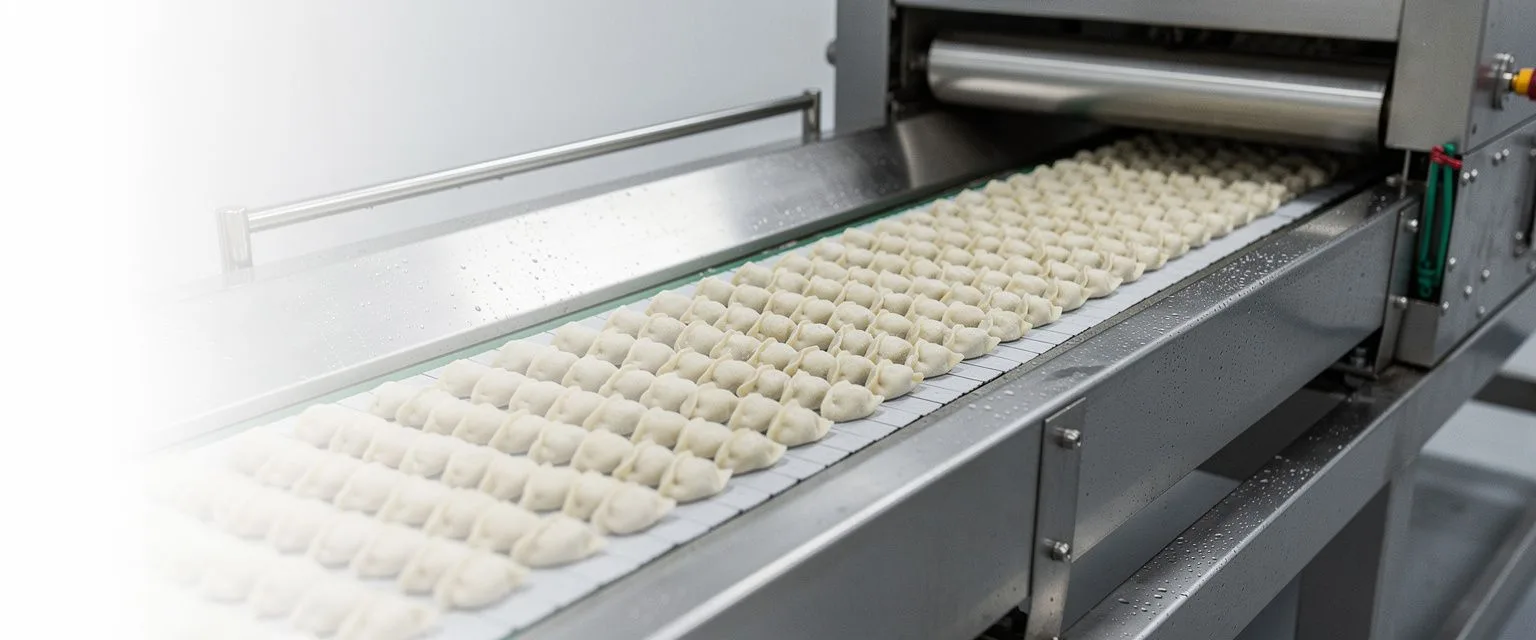
Filling machines — dumplings, potstickers, wontons, and more
The stability of filling equipment depends on the pairing of dough and filling. Dough that is too dry will crack; dough that is too wet will stick to the machine. High-moisture fillings tend to overflow during forming. A tabletop electric filling machine suits small-to-medium volumes and frequent product changeovers, while high-speed filling equipment suits stable, high-volume production of a single item.
When requesting a quote, please specify the product type, target output per hour, and whether frequent line changes are needed — changeover frequency often affects actual output more than maximum speed.
Turnkey plant planning and projects
Turnkey projects deal with the relationships between equipment: whether the cycle times of upstream and downstream machines match, whether personnel and material flows cross paths, and how the cleaning area is separated from the production area. If any link is mismatched, the entire line's output is held back by the slowest segment.
These projects require more information than single-machine purchases: plant floor plan with column positions, electrical and water supply/drainage conditions, target product mix, and the output share of each product. The more complete the data, the more risks can be eliminated during the planning stage.