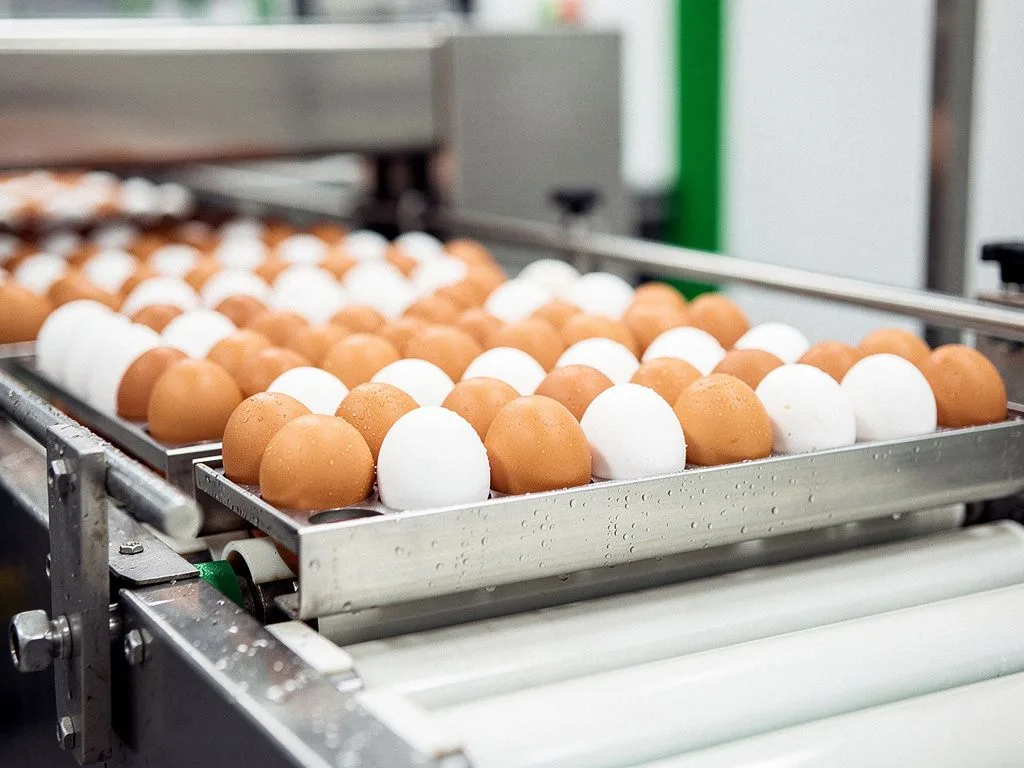
How to Evaluate Hygiene and Cleaning Design in Egg Processing Equipment
Evaluating the hygiene design of egg processing equipment comes down to three key contact surfaces: the egg liquid contact surface, the steam contact surface, and the drainage surface after cleaning. Buyers should first confirm that components in direct contact with egg liquid are made of food-grade stainless steel, and request material certificates and cleaning process diagrams from the supplier. Next, assess the ease of disassembly for cleaning and whether the equipment supports CIP (clean-in-place) procedures. Finally, inspect the steam path and drainage design of the continuous egg cooking line to prevent condensed water from dripping back onto the product line and causing secondary contamination. Only after these three checks should you move on to pricing and overall plant planning.
Why the Egg Liquid Contact Surface Must Be Food-Grade Stainless Steel
Egg liquid is a high-protein ingredient that easily corrodes and develops odors when in contact with carbon steel or galvanized parts—a hygiene blind spot buyers often overlook. The evaluation is straightforward: ask the supplier to list all components that come into contact with egg liquid, specifying material grades and surface treatment methods. Food-grade stainless steel (such as 304 or 316 series) withstands the salt and acidic content of egg liquid, and the surface polish level affects bacterial adhesion—the lower the Ra roughness value, the harder it is for bacteria to accumulate. When reviewing specifications, pay special attention to three areas: the volumetric filling valves, the inner wall of the mixing tank, and pipe connections, as these are where egg liquid lingers the longest. If the supplier cannot provide material certificates or grade markings, the equipment is not suitable for egg processing—this is a non-negotiable baseline, not an option.
Should Cleaning Design Follow CIP or Manual Disassembly Procedures
The cleaning method of egg processing equipment directly determines daily downtime and labor costs, so buyers must first clarify whether their production line suits CIP (clean-in-place) or manual disassembly. CIP systems circulate cleaning solution through the piping, making them suitable for large equipment like continuous egg cooking lines—but only if the piping design has no dead ends and valves can withstand cleaning solution concentrations. Manual disassembly suits small benchtop or batch equipment, where the key is whether parts can be removed by hand without special tools. When evaluating, request a cleaning process diagram from the supplier that shows cleaning solution entry points, flow rate, temperature, and drainage paths. Another often-overlooked detail is the drying design after cleaning—a humid environment turns residual egg liquid into a bacterial breeding ground, so drainage slope and drain port placement are also part of hygiene design.
How to Prevent Steam and Condensate Contamination in Continuous Egg Cooking Lines
The hygiene risk in continuous egg cooking lines often comes from the steam system itself, not the egg liquid contact surface. Steam generates condensate during transport, and if condensate drips onto formed or semi-formed egg products, it causes localized over-moisture and microbial growth. To evaluate the hygiene design of this system, buyers should check three areas: whether the steam inlet has a filter to remove pipe corrosion debris, whether the steam hood top has a drainage trough to prevent condensate accumulation, and whether the condensate drain line is completely isolated from the product line. These details are typically not listed in specification sheets, so you must request a steam path diagram and drainage flow explanation from the supplier during the inquiry stage. For buyers with high daily output, improper condensate management directly affects finished product yield and shelf life—this is an issue that must be clarified during specification confirmation.
Six-Point Hygiene Design Checklist for Egg Processing Equipment
Verify Materials in Contact with Liquid Egg
Ask suppliers to list the material grades and surface roughness of all components that contact liquid egg, and provide material certificates. This is the first line of defense in hygienic design.
Assess Suitability for Tear-Down Cleaning and CIP
Based on line capacity, determine whether clean-in-place (CIP) or manual tear-down cleaning is appropriate, and confirm that piping has no dead ends and that valves withstand cleaning solution concentrations, so daily cleaning does not become a bottleneck.
Manage Steam Paths and Condensate
Check steam inlet filtration, steam hood drain trough design, and isolation of condensate lines to prevent condensate drips from causing secondary product contamination.
Position Drainage Slopes and Outlets
Confirm that post-wash drainage paths are unobstructed and that drain outlets are located away from product lines. Moisture-retentive zones can become breeding grounds for bacteria and must be eliminated at the design stage.
Select Seals and Shaft Packing Materials
Seals on rotating or reciprocating parts such as agitator shafts and filling valves must be made of food-grade rubber or silicone, and must be replaceable on a schedule rather than permanently sealed.
Plan Plant Layout and Disassembly Space
Evaluate the cleaning traffic flow and the space needed for disassembling parts after equipment installation. If space is insufficient, cleaning procedures cannot be carried out properly, and even the best design will be ineffective.
At What Stage Should Hygienic Design Be Discussed in Whole-Plant Planning?
Hygienic design is not an issue to address after equipment arrives; it is a decision that must be incorporated at the very beginning of whole-plant planning. When buyers discuss whole-plant planning with suppliers, they should first provide the plant floor plan and utility layouts so the supplier can plan cleaning routes, drainage piping, and steam supply locations accordingly. If cleaning route conflicts are discovered only after installation, additional piping work or equipment reconfiguration is often required, and the extra cost far exceeds the cost of prior planning. At the whole-plant planning stage, buyers should also confirm the water quality requirements for cleaning—if local water hardness is high, water softening equipment may be needed; otherwise, scale will remain on equipment surfaces after cleaning, affecting hygiene and appearance. Buyers should treat hygienic design as a core element of whole-plant planning and discuss it in parallel with capacity allocation and traffic flow planning to avoid hygiene dead zones during future operations.
What Additional Hygienic Design Requirements Do Southeast Asian Plant Environments Impose?
The climate in Southeast Asian markets (including Thailand) is characterized by high temperature and high humidity, which imposes two additional requirements on the hygienic design of egg processing equipment. First, the moisture protection of equipment housings and control panels must meet a certain level to prevent moisture from penetrating electrical components and causing malfunctions or short circuits. Second, if plant air conditioning and ventilation are insufficient, drying time after cleaning will be prolonged, indirectly increasing microbiological risk. When evaluating equipment specifications, buyers should proactively inform suppliers of local climate and plant conditions so suppliers can adjust material selection and sealing design accordingly. For buyers planning to set up plants in Southeast Asia, hygienic design cannot simply replicate the experience of temperate countries; climate factors must be incorporated into specification confirmation. This is also why whole-plant planning requires customization rather than applying a standard solution.
Which Hygienic Design Documents Should Buyers Request from Suppliers During RFQ?
The list of documents requested during the RFQ stage determines whether buyers can effectively verify the hygienic design of equipment later. Buyers are advised to request four types of documents from suppliers: material certificates (indicating the grades and surface treatments of components in contact with liquid egg), cleaning process diagrams (indicating cleaning solution entry points, flow rates, temperatures, and drainage paths), steam path diagrams (indicating steam inlet filtration and condensate drainage design), and a recommended schedule for seal materials and replacement intervals. These four documents are indispensable; if any one is missing, it indicates that the supplier's explanation of hygienic design is incomplete. After receiving the documents, buyers should compare them item by item with their own plant conditions and confirm there are no conflicts before entering the contract stage. For turnkey whole-plant projects, these documents should also be included as contract attachments, serving as the basis for acceptance and future maintenance.
Request Hygienic Design Documentation and Full Plant Planning Assessment
Please provide your plant floor plan and egg product line requirements. We will evaluate the hygienic design configuration based on your plant conditions and product specifications, and provide a customized quotation.