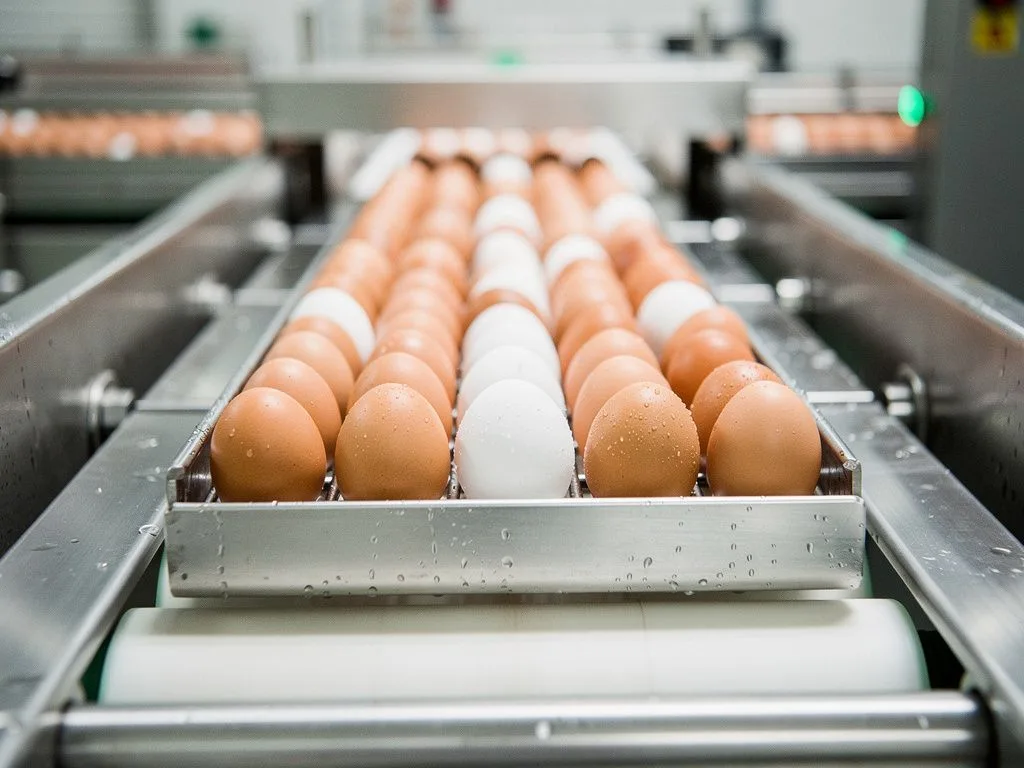
What are the equipment differences between a liquid egg production line and a shell egg production line?
The differences between a liquid egg line and a shell egg line are mainly concentrated in the front-end processing units. A liquid egg line requires washing, breaking, separating, filtering, pasteurizing, and metered filling; a shell egg line mainly involves washing, crack detection, steam cooking and forming, and packaging. Although the downstream storage and shipping sections of the two lines are similar, the core mechanical configurations are completely different. Before selecting a line, you must first confirm the product type and downstream application.
What are the core pieces of equipment in a liquid egg production line?
What are the core pieces of equipment in a liquid egg production line? The answer is: washing machine, egg breaker, shell and liquid separation unit, filtration device, pasteurization section (with batch pasteurization being a common option), and metered filling machine. Before liquid egg products enter the filling stage, the shells must be completely removed and the liquid must pass through filtration, making the breaking and separation unit the key bottleneck of the entire line. The filling section is specified according to the downstream application; for example, liquid eggs for bakeries, liquid eggs for prepared foods, or further processed egg products all have different requirements for viscosity, air content, and filling accuracy. When evaluating a liquid egg line, buyers should first list the final form of their own products and then work backwards to determine the corresponding specifications of the front-end equipment. Specifically, whole egg liquid and egg white liquid commonly used by bakeries require different filter mesh sizes and separation precision; liquid eggs used by central kitchens may require a higher solids ratio, so the temperature and time curve of the pasteurization section must be adjusted accordingly; small-capacity liquid eggs for retail packaging place more emphasis on filling accuracy and seal integrity. If buyers can provide sample eggs, expected daily output, and packaging specifications, it will help the equipment supplier quickly determine the processing capacity and bottleneck location of the front-end units.
What are the core pieces of equipment in a shell egg production line?
What are the core pieces of equipment in a shell egg production line? The answer is: washing machine, crack detection unit, continuous steam egg forming line, cooling section, and packaging line. The value of shell egg products lies in 'preserving the intact egg body,' so the primary task after washing is crack detection and rejection of defective eggs, rather than breaking the shells. The continuous steam egg forming line is responsible for steaming shell-on or shell-off eggs into a fixed shape before they enter cooling and packaging. Compared to a liquid egg line, a shell egg line lacks high-cost units such as breaking, separation, and pasteurization, but temperature and time control in the forming section is more critical, directly affecting the texture and appearance of the finished product. Taking the common shell-on onsen egg as an example, if the temperature gradient in the steaming section is not properly controlled, there will be a noticeable difference in the doneness of the yolk and the white, affecting the product's commercial value; for shell-off tea eggs, the eggs need to enter a marinating immersion section after steaming, so the line design must reserve space for immersion tanks and flipping mechanisms. When planning a shell egg line, buyers should first confirm whether the product is shell-on or shell-off, the single-egg weight range, and the daily line changeover frequency, as these conditions directly affect the mold specifications and conveying speed of the forming section.
How do the cleaning and hygiene requirements differ between the two lines?
How do the cleaning and hygiene requirements differ between the two lines? The answer is: the cleaning focus of a liquid egg line is on the piping and separation units after breaking, because once the egg liquid leaves the shell, the surface area increases and the chance of contact with contamination sources rises; the cleaning focus of a shell egg line is on the washing section and the steaming section, as the cleanliness of the eggshell surface directly affects the steaming quality. When planning the plant, buyers should include the CIP (clean-in-place) requirements for the piping of the liquid egg line in their evaluation and reserve sufficient drainage and drying space; for the shell egg line, they should evaluate the steam supply and exhaust emissions of the steaming section. The two line types have different levels of dependence on plant water quality, steam quality, and drainage treatment, so plant conditions must be confirmed before quoting. In practice, the CIP system of a liquid egg line typically requires three cleaning stages: hot water, caustic solution, and acid solution, and the number of pipe fittings and valves is far greater than that of a shell egg line, so the initial investment and subsequent utility costs are higher; cleaning of a shell egg line is concentrated inside the washing machine and the steaming chamber, with relatively lower frequency and intensity. If buyers plan to set up both lines, the CIP station should be installed separately to avoid cross-contamination between the cleaning water of the liquid egg and shell egg lines.
What is the most commonly overlooked cost item for buyers before selecting a production line?
What is the most commonly overlooked cost item for buyers before selecting a production line? The answer is: beyond the purchase cost of the equipment itself, factory layout adjustments, steam and drainage piping additions, CIP system installation, personnel training, and ongoing spare parts and consumables are all hidden costs that are often underestimated. Many buyers only compare equipment unit prices when requesting quotes, overlooking the civil and electromechanical works required for whole-plant planning, which leads to budget shortfalls. When preparing to request quotes, buyers should ask equipment suppliers to provide three quotation levels—"equipment price," "installation price," and "complete plant package price"—and itemize what is included and excluded in each. In addition, annual spare parts replacement, cleaning chemical consumption, and electricity and steam costs should be factored into a five-year total cost of ownership calculation. For first-time plant builders, it is recommended to first validate the process with a small-scale pilot line, then scale up to a full production line based on actual yield and capacity, which can effectively reduce initial investment risk.
Six conditions buyers should clarify before selecting a production line
Final product form
Liquid egg, shell-on steamed egg, shell-off steamed egg, or further processed egg products—each form requires a completely different equipment combination.
Raw egg source
Washed or unwashed eggs, shell-on or shell-off feed, will determine whether front-end washing and egg-breaking machines are needed.
Production capacity
Small-scale trial production and full production lines have different equipment configurations, which should be planned according to actual capacity.
Downstream application
Baking, prepared foods, central kitchens, or retail packaging have different requirements for filling precision and sterilization.
Plant conditions
Steam supply, drainage, water quality, and electrical capacity will limit the equipment specifications that can be used.
Regulations and markets
Export markets have different requirements for liquid egg pasteurization or shell egg labeling; buyers should confirm the target country's regulations before selecting a line.
Can liquid egg and shell egg production lines share some equipment?
Can liquid egg and shell egg production lines share some equipment? The answer is: washing machines and some storage units can be shared, but core units such as egg breaking, separation, pasteurization, filling, and steam cooking/molding cannot be shared. In practice, some buyers first build a shell egg line and then expand with a liquid egg line based on market demand. In this case, the washing section can be shared, but the downstream sections must be independent. When evaluating expansion plans, buyers should first confirm whether the existing washing section's throughput is sufficient to support the feed requirements of both lines, and reserve installation space and piping connections for downstream equipment. If plant space is limited, priorities must be decided during initial planning to avoid forced relocation during future expansion. Another common practice is to share cold storage and shipping areas, but note that liquid eggs typically require lower storage temperatures than shell eggs; mixing them may shorten liquid egg shelf life or cause condensation on shell egg surfaces. When planning shared areas, buyers should incorporate temperature zoning and personnel flow into the design to avoid cross-contamination and operational interference.
What is the basis for quoting liquid egg and shell egg lines in whole-plant planning?
What is the basis for quoting liquid egg and shell egg lines in whole-plant planning? The answer is: it depends on plant size, product specifications, production targets, and automation level, and cannot be summarized by a single model. Whole-plant planning typically includes equipment layout, plant flow, steam and drainage planning, control systems, and personnel training. A site survey or detailed plant drawings are required before quoting. When preparing to request quotes, buyers should have plant floor plans, expected production volume, product specifications, and target market information ready. The more complete this information, the higher the quotation accuracy. For buyers in Southeast Asian markets, it is also necessary to assess whether local voltage, steam pressure, and water quality match the equipment. In practice, automation level has the greatest impact on pricing: fully automatic lines require higher investment in control systems and sensors but reduce labor and human error; semi-automatic lines have lower initial investment but higher ongoing labor costs and quality control risks. Buyers should choose the appropriate automation level based on their own workforce quality, product positioning, and market price range, rather than pursuing full automation unconditionally.
What additional equipment is needed to upgrade from shell eggs to liquid eggs?
What additional equipment is needed to upgrade from shell eggs to liquid eggs? The answer is: an egg breaker, an eggshell-and-liquid separation unit, a filtration system, a pasteurization section, and a volumetric filling machine. The key to the upgrade is shifting from preserving whole eggs to processing egg liquid, so all piping and units that contact the egg liquid must meet food-grade hygiene standards. When evaluating the feasibility of an upgrade, buyers should first check whether the existing plant has sufficient steam supply (for pasteurization), drainage capacity (for CIP cleaning), and electrical capacity (for the filling section). If the existing conditions are insufficient, plant improvements must be completed before evaluating additional equipment. Another common issue is the source of raw eggs: if the upgraded liquid egg line uses the same incoming egg specifications as the existing shell egg line, inconsistent shell quality may cause fluctuations in the breaking rate. Therefore, it is recommended to simultaneously evaluate the raw egg supply chain and grading system during the upgrade. Buyers who can agree on incoming egg specifications with suppliers in advance will help stabilize the yield and capacity of the liquid egg line.
What are the differences in compliance requirements for liquid egg and shell egg production lines in export markets?
What are the differences in compliance requirements for liquid egg and shell egg production lines in export markets? The answer is: because liquid eggs are processed egg products, most markets require clear pasteurization conditions, shelf-life labeling, and traceability records; shell eggs, which retain the whole egg, have relatively simpler labeling and traceability requirements, but some markets have different standards for washing and crack detection. When planning an export-oriented production line, buyers should first confirm the food regulations and import inspection procedures of the destination country and incorporate the relevant requirements into equipment selection and plant design. Common compliance items include: pasteurization temperature and time records for liquid eggs, traceability of filling batch numbers, validation records for CIP cleaning, and environmental microbiological monitoring plans for the plant. For buyers supplying both domestic and export markets, it is recommended to adopt a higher specification design at the initial planning stage to avoid forced upgrades later due to market changes.
Need to evaluate a liquid egg or shell egg production line based on your product type?
Please provide your plant conditions, planned output, and product specifications, and we will plan the equipment configuration and provide a quotation based on your actual needs.