Forming Differences Between Frozen and Fresh Dumplings: Can One Filling Machine Handle Both?
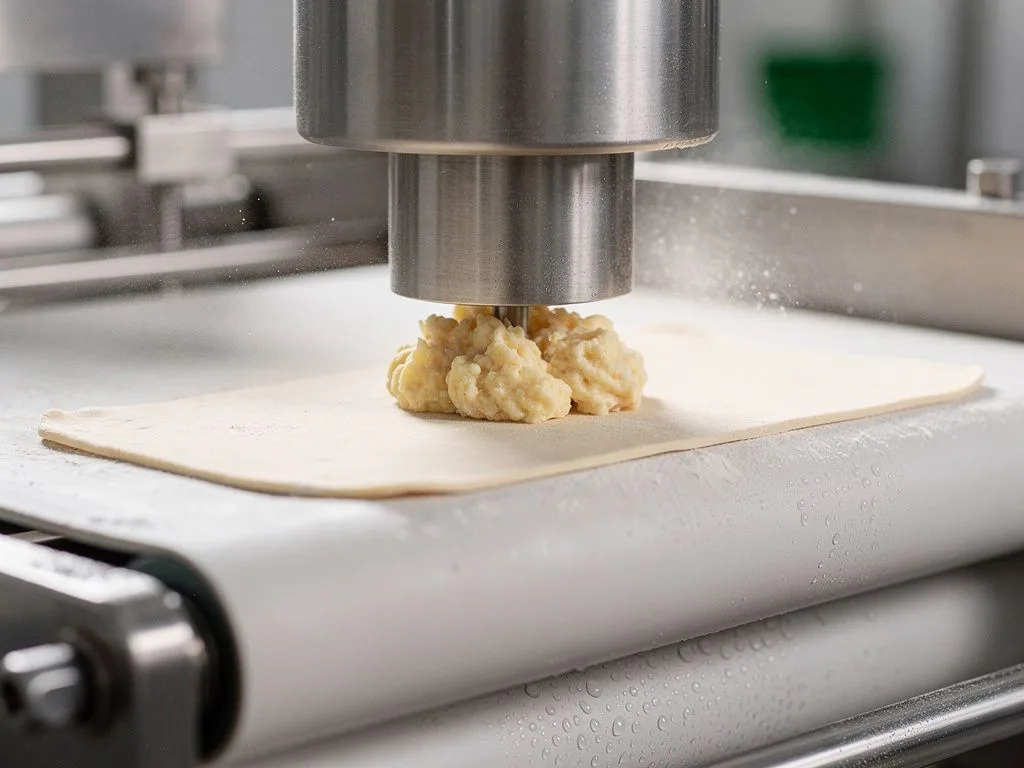
The same tabletop electric filling machine can produce both frozen and fresh dumplings, but the adjustment priorities during the forming stage are completely different. Frozen products require a dough skin with lower moisture content, greater thickness, and a higher fat ratio in the filling to withstand volume changes during rapid freezing. Fresh products, on the other hand, require a soft dough skin, tight sealing, and the ability to be cooked immediately or stored briefly under refrigeration after exiting the machine. The key factor for buyers to assess is not "can the same machine be shared," but rather "which supply chain is your final product destined for." TWB2B 食品機械 DemoSite Food Machinery's filling machines support parameter adjustments for both modes, but specific molds and filling settings must be confirmed based on product specifications.
Why Are the Forming Requirements for Frozen Dumplings Different from Fresh Ones?
Frozen dumplings must incorporate "freezing tolerance" during the forming stage, which is the most fundamental difference from fresh dumplings. When dumplings enter the rapid freezing tunnel, moisture in the dough skin crystallizes and expands. If the dough skin is too thin or the sealing is not tight enough during forming, cracks, filling exposure, or skin-filling separation can occur after thawing. In practice, the dough skin thickness for frozen dumplings is typically a certain percentage greater than that of fresh products, and the proportion of fats and colloids in the filling is also increased to act as a moisture barrier after freezing. The pressing force, sealing pattern depth, and dough stretching method during the forming stage all need to be designed for the "post-freezing state" rather than the "state immediately after exiting the machine." For buyers, this means that when selecting a machine, you cannot only look at machine speed; you must confirm whether the forming parameters can be fine-tuned for freezing conditions.
Where Are the Forming Priorities for Fresh Dumplings?
The core goal of forming fresh dumplings (referring to products supplied to restaurants, market stalls, or same-day delivery) is "ready to use upon exiting the machine," which is the opposite of the adjustment direction for frozen products. Fresh dumplings have a higher moisture content in the dough skin and a softer texture, aiming to provide a taste close to hand-rolled dough after cooking. The sealing pattern focuses on aesthetics and consistency, as fresh products are typically displayed in stores or packaging. Forming speed is not the primary consideration in fresh mode, because there is no time pressure from rapid freezing in the downstream process, and the production line pace can be adjusted to accommodate manual packaging or cold storage. For buyers in the food service channel, the forming priorities in fresh mode are "consistent skin-to-filling ratio" and "secure sealing without loosening," both of which directly affect the consumer's first bite experience.
What Parameters Need to Be Adjusted When Switching Between the Two Modes on the Same Filling Machine?
When switching from frozen to fresh mode (or vice versa), the parameters that need adjustment on the filling machine are concentrated in three areas: the dough forming section, the filling section, and the sealing section. In the dough section, the roller gap and stretching ratio need to be adjusted to accommodate different dough thicknesses and moisture contents. In the filling section, the filling supply volume and filling pressure need to be adjusted, because frozen fillings are typically more viscous while fresh fillings are softer. In the sealing section, the mold's pattern depth and pressing angle need to be changed or adjusted. In practice, mold changeover is the most time-consuming part of switching modes, so buyers with more than two product lines often prepare an additional set of corresponding molds to reduce downtime. TWB2B 食品機械 DemoSite Food Machinery's filling machines are designed to support quick mold changes, but the specific mold specifications that can be accommodated must be confirmed based on the actual product.
The same principle applies to dumplings, potstickers, wontons, and wonton wrappers: "forming parameters must correspond to the final product form" is the common basis for machine selection and adjustment—the machine itself is merely the execution tool. For buyers in Southeast Asian markets (such as Thailand), where wontons are a common frozen hot-pot ingredient, the forming stage must already account for the downstream quick-freezing curve. In other words, regardless of the product type, the forming parameters must be aligned with the final product form.
Should buyers decide the product positioning first, or choose the machine first?
The correct decision sequence is to first determine the product positioning, then work backward to define the forming requirements and machine specifications. Many buyers ask directly, "Can this machine handle freezing?" during inquiries, but a more effective question is, "Which channel will my dumplings go through—supermarket freezer cabinets, restaurant fresh-making, or central kitchen distribution?" The channel determines the downstream handling (frozen, chilled, or fresh-made), which in turn determines the forming parameters, and only then can those parameters be mapped to specific machine adjustment directions. TWB2B 食品機械 DemoSite Food Machinery first confirms the buyer's product positioning and supply chain model during the turnkey planning stage, and only then recommends the corresponding filling machine specifications and mold configurations. This approach helps buyers avoid the situation where they purchase a machine and only later discover that significant modifications are required. For buyers planning to enter the Southeast Asian market, the product positioning decision is even more critical, because local cold-chain conditions differ from those in Taiwan, and the forming design must reserve a larger adjustment margin.
Which aspects of turnkey plant planning are affected by forming differences?
Differences at the forming stage propagate both upstream and downstream, affecting multiple aspects of turnkey plant planning. Upstream, they affect dough preparation (resting time, dough thickness tolerance) and filling preparation (fat ratio, viscosity, particle size); downstream, they affect the conditions for tray loading, quick freezing, packaging, and metal detection. For example, if frozen dumplings need to enter a quick-freezing tunnel after forming, the production line rhythm must match the freezing equipment's capacity; otherwise, there is a food safety risk of products staying at room temperature too long because "forming is too fast and freezing cannot keep up." For fresh-made dumplings, the rhythm must align with packaging, labeling, and chilled shipping. For buyers, this means machine selection cannot be based solely on the filling machine's standalone specifications—the forming stage must be evaluated within the overall plant rhythm. TWB2B 食品機械 DemoSite Food Machinery provides turnkey plant planning and turnkey services, incorporating forming differences into the production line balance calculation, and provides customized quotes based on the factory and product.
Six key adjustment points for frozen vs. fresh-made forming
Dough moisture content and thickness
Frozen products require lower moisture content and thicker dough to withstand the crystal expansion during quick freezing; fresh-made products have higher moisture content and thinner dough, giving a texture closer to handmade.
Filling fat and colloid ratio
Frozen fillings need a higher fat and colloid ratio as a water-retention barrier after freezing; fresh-made fillings prioritize texture and flavor, and can have lower viscosity.
Sealing pattern and pressing force
Frozen products need deeper sealing patterns and stronger pressing force to prevent cracking after thawing; fresh-made products focus on appearance and consistency.
Filling pressure and supply volume
Frozen fillings are more viscous and require higher filling pressure; fresh-made fillings are softer, and the filling parameters need to be adjusted accordingly to maintain a consistent wrapper-to-filling ratio.
Forming speed and line rhythm
Frozen products must match the capacity of downstream quick-freezing equipment; fresh-made products can align with manual packaging or chilled storage, and speed is not the primary consideration.
Mold specifications and quick-change design
The two modes require different molds; buyers with multiple product lines are advised to prepare spare molds to reduce downtime. Specific specifications should be confirmed based on the actual product.
What should be particularly noted about forming design for the Southeast Asian market?
The cold chain conditions in the Southeast Asian market (especially Thailand) differ from those in Taiwan and Japan, which directly affects the direction of forming design. Local sales channels for frozen dumplings include supermarket freezers and traditional markets, where the downstream freezing conditions may not maintain a stable quick-freezing curve. Therefore, the forming stage needs to allow for greater "freezing tolerance," meaning thicker dough skins and tighter sealing. Another difference is that local consumers' requirements for the thinness of wonton and dumpling wrappers differ from Taiwanese-style products, so the forming pressure needs to be adjusted accordingly. For buyers interested in entering markets such as Thailand, TWB2B 食品機械 DemoSite Food Machinery can provide turnkey plant planning services, incorporating local cold chain conditions, product positioning, and forming parameters into the evaluation, and offering customized quotes based on the plant and products, to prevent buyers from directly replicating Taiwanese specifications to Southeast Asian production lines.
Need to evaluate forming specifications based on product positioning?
Please provide your product type (frozen or fresh-made), target market, and estimated production capacity. We will recommend the appropriate filling machine specifications and mold configurations based on your actual needs, and provide a preliminary evaluation for turnkey plant planning.