When to Choose 304 vs. 316 Stainless Steel
The main difference between 304 and 316 stainless steel lies in nickel content and the addition of molybdenum. 304 is a general-purpose, food-grade stainless steel, while 316, thanks to its molybdenum content, offers higher corrosion resistance against salt, chlorine, and acidic foods. For food machinery buyers, the choice should be based on the types of food contact, cleaning frequency, and local water quality, rather than price alone. For egg mixing and the dry contact parts of filling machines, 304 is generally sufficient. However, for continuous egg steaming lines and wet sections in plants handling sauces, upgrading to 316 is recommended to extend equipment life and reduce corrosion risk.
Which Food Machinery Parts Are Suitable for 304 Stainless Steel?
304 stainless steel is suitable for parts that come into contact with dry or neutral ingredients, such as the inner walls of egg mixing tanks, the forming molds and conveyor sections of filling machines, and the main frames of tabletop electric filling machines. 304 has a nickel content of about 8% and a chromium content of about 18%, which maintains a stable passivation layer on the surface in most dry or neutral pH environments, meeting the hygiene requirements of general food processing. For small and medium-sized processing plants in Southeast Asian markets like Thailand, where products are mainly dry dough items such as dumplings, potstickers, and wontons, and cleaning is done with plain water daily, 304 can meet long-term corrosion resistance needs. Buyers should proactively inform suppliers of the daily cleaning frequency and whether chlorine-based cleaners are used, as this directly affects whether 304 is sufficient.
In What Situations Must 316 Stainless Steel Be Used?
316 stainless steel must be used when food contact involves salt, chlorine, or acidic ingredients, and the equipment operates in a continuously humid, hot, or steam environment. Typical applications include the steam sections of continuous egg steaming lines, piping for sauce filling, and entire plant setups in coastal areas that use groundwater for cleaning. 316 contains about 2% to 3% molybdenum, which resists pitting and crevice corrosion caused by chloride ions—problems that 304 is prone to after prolonged salt exposure. For buyers in coastal provinces of Thailand, if the plant uses groundwater with high chlorine content, even if the product itself is salt-free, chloride ions from cleaning can accumulate on 304 surfaces and cause early rust. In this case, upgrading to 316 is a reasonable cost consideration.
Why Can't You Choose 304 Based on Price Alone and Ignore Subsequent Maintenance Costs?
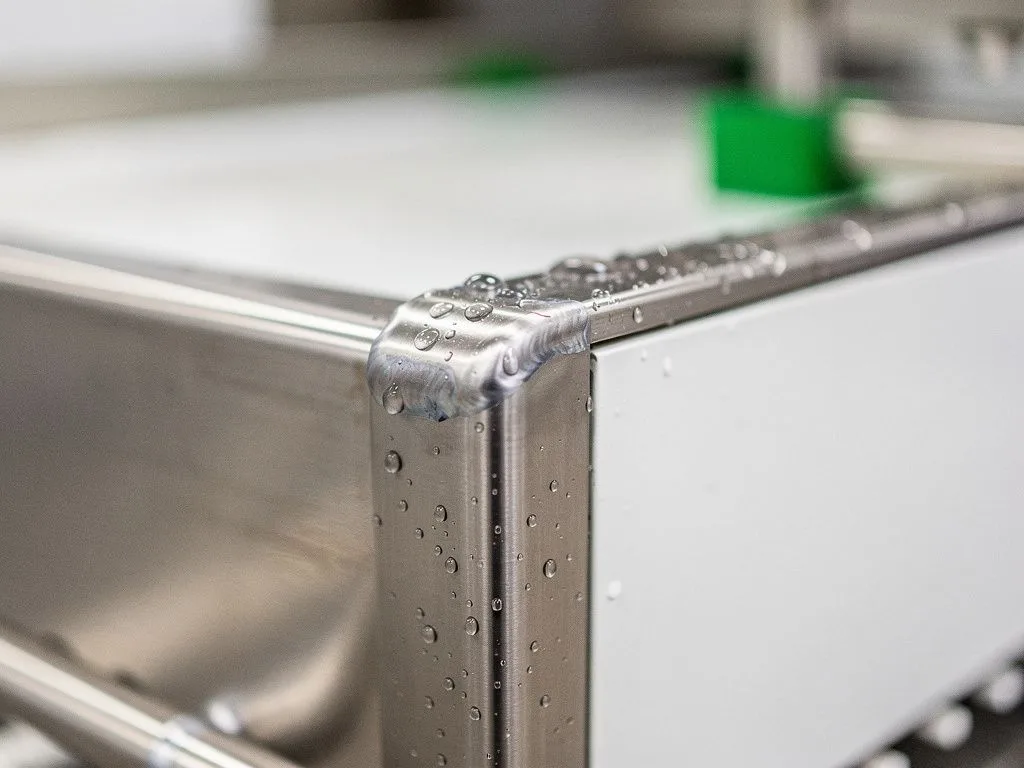
You cannot choose 304 based on price alone and ignore subsequent maintenance costs, because once corrosion occurs, the losses from repair downtime and product contamination often far exceed the initial price difference of upgrading to 316. Corrosion in food machinery typically starts at stress concentration points such as welds, elbows, and screw holes. If these areas on 304 are not passivated, red rust can appear within six months to a year. For high-temperature, humid equipment like continuous egg steaming lines, red rust not only affects hygiene but can also cause iron ions to leach into the egg liquid, discoloring it and leading to entire batch rejection. When evaluating quotes, buyers should require suppliers to clearly specify which parts are 304 and which are 316, and ask whether welds have undergone pickling and passivation treatment. This reflects the long-term ownership cost better than simply comparing the overall machine price.
Six Specifications to Check When Choosing 304 or 316
Salt content and pH of food-contact materials
For salty, sauce-based, or acidic foods, 316 is the preferred choice; for dry, neutral foods, 304 is sufficient. This is the most direct criterion.
Chloride ion content in cleaning water
In coastal areas or facilities using groundwater, even if the product itself contains no salt, chloride ions from the cleaning process can corrode 304, so upgrading to 316 is recommended.
Cleaning frequency and type of cleaning agents
When cleaning multiple times daily or using chlorine-based cleaners, the corrosion resistance of 316 is clearly advantageous; for once-daily rinsing with plain water, 304 is sufficient.
Temperature and humidity in equipment zones
The steam section of a continuous egg-cooking line operates under high temperature and high humidity, where 316 offers better resistance to pitting caused by prolonged condensate exposure.
Passivation treatment of welds and bends
Regardless of whether 304 or 316 is used, welds that are not acid-pickled and passivated can become starting points for corrosion. Surface condition should be inspected during acceptance.
Material grade labeling for plant-wide components
For turnkey projects, require the supplier to itemize 304 and 316 components in the quotation to prevent material mixing during future maintenance.
How does material configuration differ between filling machines and egg processing equipment?
The material configuration differs between filling machines and egg processing equipment, mainly due to the moisture and salt content of the food-contact materials. For tabletop electric filling machines handling dumplings, potstickers, wontons, and similar products, the dough is dry and neutral, and although the filling may contain salt, contact time is short, so 304 is generally sufficient for the main frame and forming components. In contrast, a continuous egg-cooking line operates with egg liquid in a hot, humid steam environment for extended periods, and some products include salted seasonings, so 316 is recommended for the conveyor belts and forming molds in the steam section. For egg mixing and metering filling equipment, 304 is adequate if used with plain egg liquid and cleaned with fresh water; if used with seasoned egg liquid or for further processing, the need to upgrade to 316 should be evaluated.
How should material grading be confirmed with suppliers during plant-wide planning?
During plant-wide planning, material grading should be confirmed with suppliers by requesting an itemized material list at the inquiry stage, specifying the steel grade for each component. A turnkey project covers multiple equipment sections from raw material handling to packaging, and corrosion conditions vary greatly across sections. Using 316 throughout would inflate the budget, while using 304 throughout could lead to early corrosion in steam or cleaning areas. A reasonable approach is to configure materials by zone based on food contact, temperature, humidity, and cleaning conditions—for example, 304 for dry and forming areas, and 316 for steam and salt-containing areas. Buyers should request a material configuration drawing before signing the contract and conduct spot checks on welds and inner wall surfaces during acceptance, which provides better long-term assurance than relying solely on the supplier's verbal statements.
What special considerations apply when selecting materials for Thailand and other Southeast Asian markets?
When selecting materials for Thailand and other Southeast Asian markets, special attention should be paid to local water quality, climate, and cleaning practices, as these three factors directly affect the performance of 304 and 316. Groundwater in Thailand's coastal provinces often contains high levels of chloride ions and minerals, while inland provinces may use slightly acidic surface water, and these water quality differences can accelerate pitting in 304. The hot, humid Southeast Asian climate means that if equipment is not thoroughly dried during non-production hours, condensate can create localized corrosion environments on 304 surfaces. Additionally, local small and medium-sized processing plants often use chlorine-based bleach for disinfection, which is a common cause of red rust on 304 within a year. Buyers should proactively provide the province of the facility, water source type, and cleaning procedures during inquiries so that suppliers can recommend an appropriate material configuration.
Get material configuration recommendations based on your product and plant conditions
Provide your product type, cleaning process, and plant water source information, and we will recommend the optimal 304 and 316 zoning configuration and provide an itemized material quotation.