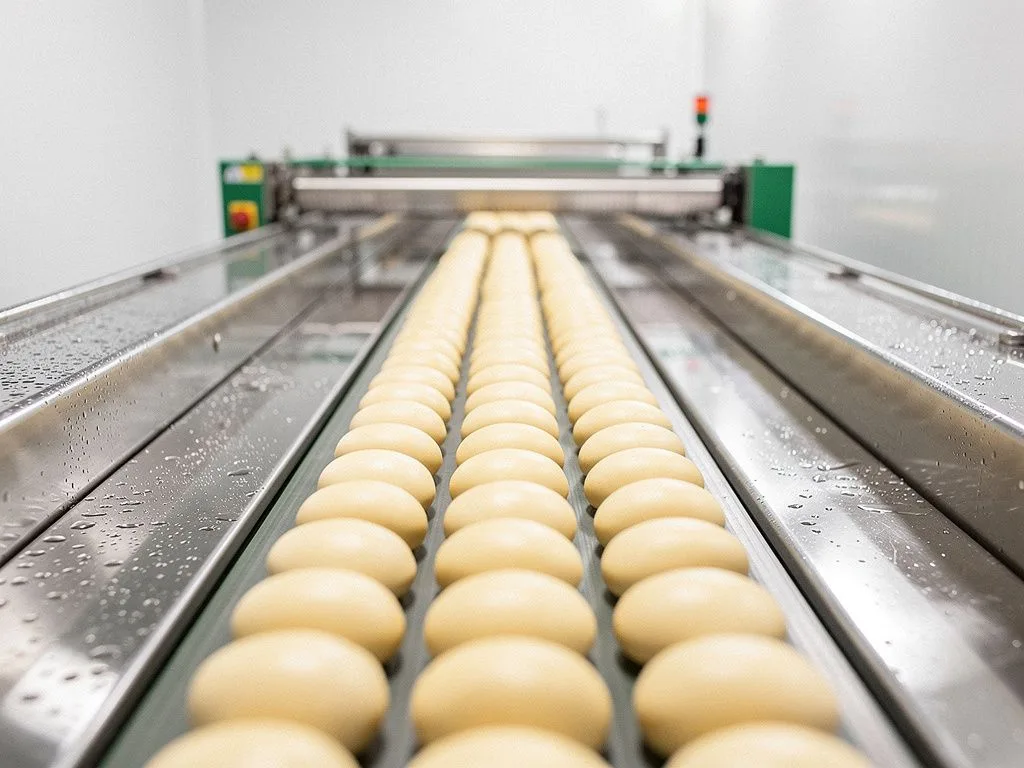
How should capacity buffer design be approached for peak seasons?
Capacity buffer design for peak seasons involves reserving schedulable slack beyond normal capacity, allowing egg processing equipment, filling machines, and entire lines to maintain quality and delivery during order surges. Buyers should first define the peak factor, buffer sources, and switching conditions, then present whole-plant planning requirements to equipment manufacturers, who will provide customized quotes based on the facility and products. Buffering is not about buying more machines; it is about structuring the production line as a flexible combination that can be swapped, run overtime, or paused.
Why must capacity buffering be decided at the machine selection stage, rather than after the line is running?
Capacity buffering must be decided at the machine selection stage because the capacity limits of egg liquid mixing and metered filling, continuous egg steaming and forming lines, and filling machines are determined by the bottlenecks in the feeding, forming, and packaging sections. Adding machines later can only address one section, while the overall line rhythm remains constrained by the originally slowest link. If buyers only provide an "average monthly output" when requesting quotes, the equipment manufacturer can only configure for average capacity. Once festive seasons, Ramadan, or peak periods arrive, order volumes may double within two to four weeks, and average capacity immediately becomes insufficient. The correct starting point for buffer design is to calculate the peak factor (peak daily output divided by normal daily output) and then check whether each process section has corresponding slack. The cost of retrofitting machines later is typically much higher than planning in advance, because it requires reconfiguring material flow, labor, and utility connections for water, electricity, and air.
What are the sources of buffer capacity for peak seasons, and how should buyers choose a combination?
There are three main sources of buffer capacity for peak seasons: time buffer (overtime and multiple shifts), machine buffer (reserved standby machines or swappable modules), and inventory buffer (advance stocking and semi-finished goods inventory). When selecting a combination, buyers should first consider the product's storage conditions—whether the cold chain for egg liquid products and dumplings, potstickers, wontons, and wonton-style dumplings allows advance stocking. If it does, inventory buffer is the lowest-cost option; if not, they must rely on time and machine buffers. Tabletop electric filling machines, due to their small footprint and quick mold changes, are often the mainstay of machine buffering, directly added to the line during peak-season night shifts. Continuous egg steaming and forming lines, being large and slow to heat up, are better suited for time buffering (preheating in advance) rather than adding machines on short notice. Buyers should compare the costs and risks of all three buffer sources side by side before deciding on the combination ratio.
Six key questions to ask about capacity buffer design at the machine selection stage
What is the peak factor?
Buyers must first calculate the ratio of peak daily output during the busy season to normal daily output. This is the starting point for buffer design; without this figure, machine quantities cannot be configured.
Where is the bottleneck?
Egg liquid filling, egg steaming and forming, filling and forming, and packaging each have different rhythms. The slowest link in the line must be identified first so that buffering is applied effectively.
Mold change and line changeover time
The time required to change modules on tabletop filling machines for dumplings, potstickers, wontons, and wonton-style dumplings directly affects schedulable slack and must be included in buffer calculations.
Feasibility of overtime and multiple shifts
Local labor costs, night shift allowances, and working hour regulations determine whether time buffering can be used. These conditions must be confirmed in advance.
Storage conditions for semi-finished products
If the cold chain for egg liquid and filled semi-finished products allows, inventory buffering can be used; otherwise, only machine and time buffering are available.
Maintenance status of standby machines
Reserved standby machines that sit idle for long periods are prone to failure when activated during peak seasons. Buffer design must include regular trial runs and maintenance schedules.
What key factors should be considered for peak buffering in egg processing equipment?
For peak buffering in egg processing equipment, the key is to match the rhythm between the batch-based egg liquid mixing and metered filling stage and the continuous egg steaming and forming line. Since filling is a batch operation while steaming is continuous, without sufficient surge or buffer tanks between the two stages, peak-season acceleration will cause stoppages where either the filling line waits for the steaming line or vice versa. When planning, buyers should explicitly require the equipment supplier to provide the buffer capacity and switching conditions between the two stages, and to state how long this buffer capacity can sustain peak daily output. Another commonly overlooked factor is the cleaning and CIP process—cleaning time directly consumes available working hours, and if the buffer design does not account for it, actual capacity will fall short of the paper figures. Buyers should confirm with the supplier the cleaning cycle, cleaning hours, and whether spare tanks are needed, so the buffer design can actually work on site.
How should peak buffering be configured for filling machines to avoid waste?
To configure peak buffering for filling machines without waste, the key is to position the tabletop electric filling machine and the high-speed wonton and dumpling filling machine correctly. The tabletop machine offers high flexibility and quick mold changes, making it suitable for orders that require frequent product changes, such as dumplings and potstickers, and it can serve as the primary buffer machine, running extra night shifts or temporary lines during peak seasons. The high-speed wonton and dumpling filling machine provides stable output but has high changeover costs, making it better suited for long-term large orders rather than as a buffer machine. Buyers should avoid the mistake of purchasing an extra high-speed machine solely for buffering, which may sit idle on normal days and may not even be needed during peaks. A more reasonable approach is to use the high-speed machine for main products on normal days, with the tabletop machine as flexible backup, and run both machines on overtime during peak seasons—this provides the best buffering effect at the most reasonable cost. The specific number of machines should be confirmed based on actual capacity and product mix.
How can buffer design be incorporated from the start in whole-plant planning and turnkey projects?
To incorporate buffer design from the start in whole-plant planning and turnkey projects, the key is to provide the equipment supplier with the peak factor, bottleneck stage, buffer sources, and switching conditions in advance, rather than just the average capacity. Before starting whole-plant planning, buyers should prepare three sets of information: target products and per-product output, estimated peak factor and duration in weeks, and plant dimensions along with utility conditions (water, electricity, gas). The equipment supplier will use this data to plan the configuration of egg processing equipment, filling machines, and other machinery, and to reserve space in the layout for overtime operation, line changes, and pauses. The value of a turnkey project is that it builds buffer design into the system from the outset, turning it from a post-hoc addition into an integrated feature, so buyers do not need to make last-minute decisions when peak season arrives. Quotations are customized based on the plant and products, so buyers should clearly state their peak demand requirements when requesting a quote to avoid additional costs later.
How does the peak season in Southeast Asia differ from Taiwan, and how should buyers adjust their buffer design?
The main difference between peak seasons in Southeast Asia and Taiwan is that festivals occur more frequently and product changes are more common. Taking the Thai market as an example, Ramadan, Songkran, and several Buddhist holidays all drive demand peaks for egg products and filled pastries, and the products required for each festival vary significantly. When planning buffer design, buyers should account for this multi-festival, multi-product characteristic and choose machine combinations with quick mold changes and high flexibility. The tabletop electric filling machine is particularly suitable in this environment because it can quickly switch between dumplings, potstickers, wontons, and other items across different festivals. The continuous egg steaming and forming line is better suited for production lines with stable main products. Buyers should also provide the equipment supplier with local conditions such as power stability, labor costs, and cold chain infrastructure, so the buffer design matches actual operating conditions rather than simply replicating a Taiwanese production line configuration.
Let the Turnkey Plant Planning Team Handle Peak-Season Capacity Demands
Provide your target products, estimated peak-season factor, and plant conditions, and the turnkey plant planning team will configure a buffer combination of egg processing equipment, filling machines, and other machinery, with customized quotes based on your plant and products.